Showing posts with label Otis. Show all posts

Thursday, September 4, 2014

Merchant Princes of Boston: Perkins family line

From "Merchant Prince of Boston. Colonel T. H. Perkins, 1764-1854" Carl Seaburg and Stanley Patterson The Makers of the Mold by Kenneth W. Newcomb Some Merchants and Sea Captains of Old Boston: Being a Collection of Sketches of Notable Men and Mercantile Houses Prominent During the Early Half of the Nineteenth Century in the Commerce and Shipping of Boston

Colonel Thomas Handasyd Perkins, Jr., son of Colonel Thomas Handasyd Perkins, Sr. was known as "Short­-arm Tom" because his right arm was a trifle shorter than his left, a defect, however, which didn't prevent his "landing" it in the right place when occasion demanded. Born October 8 1796 in Boston and died January 14, 1850. He was born in his father's house on Pearl Street. Attended Exeter Academy in Exeter, New Hampshire, where his uncle, Dr. Benjamin Abbott, pictured below was the strict and successful headmaster. Abbott declared he was a very rare fellow because he had "a watch, a fowling piece and a Lexicon," a rare combination at that time.


In his boyhood fights his longer arm sometimes gave him an advantage. He would lead with this left, and his opponent would think that was the extent of his "reach," then suddenly he would swing around the much longer right, catching his adversary off balance. He had been put under the care of his uncle-in-law, Benjamin Abbott, at Phillips Exeter. From there he had gone, not to Harvard, but to St. Mary's Academy and he caused quite a stir and his rascal nature made his father send him off in the Jacob Jones. The ship slipped out of Boston harbor on January 14 with Tom Perkins, Jr., aboard. Companion with him was seventeen-year-old Horace Bucklin Sawyer of Burlington, Vermont. The colonel had privately enjoined Captain Roberts to give the young men neither favor nor indulgence, but to require them to bear their part. This was probably more than young Tom bargained for. The crew felt the two youths were interlopers, but they soon showed they could manage the ropes and sails handily, and were not adverse to swabbing the decks. "Jack," said Sawyer later, "agreed they were no shirks" and soon took them into favor.

Thomas, JR had had an exciting voyage. On its outward trip, the fast-sailing Jacob Jones met one British warship and engaged in a long cannon duel, until the Britisher ran out of shot. Subsequently, the Jones captured two British ships, one loaded with opium, the other with opium and gold dust. The colonel's comment on hearing this was eminently practical: "The crew will all have a handsome interest in defending the ship."
On June 7, the Jacob Jones had arrived off the Pearl River. The port of Canton was blockaded by British warships, and several American vessels were sitting out the war in Whampoa. The Jones was spotted by one of the blockading British vessels, which gave immediate chase, but being a faster ship, the Jones reached the safety of the port.
 

He was much disappointed not to be received more cordially by Uncle John Perkins Cushing, the head of the firm of J. & T. H. Perkins, who happened to be very much occupied. Young Perkins presented a letter of introduction from his Aunt Forbes, which was met with a curt "There's your desk." Nothing was said for a long time, young Perkins in the mean time spending his time making lamp-lighters, when suddenly Mr. Cushing looked over at him and said, "Is your Aunt as fat as she used to be?" "Ten times fatter" was the reply....A friendship between Mr. Cushing and his young apprentice quickly began, and the two became lifelong friends.

Not many days after their first meeting Mr. Cushing asked the new arrival if he would take an armed boat and go up to Houqua's and get from him a hundred thousand dollars. Perkins got ready for the expedition and then waited around for further instructions, thinking he would need a letter of introduction to the comprador. Mr. Cushing said that this was very unnecessary, as all the business with Houqua was by word of mouth. Houqua invited young Perkins to lunch with him and to attend an old Chinese play which Houqua said had been going on for several weeks. Finally the play was over, Houqua amusingly remarking that "the tide would not wait even for Confucius" and therefore the play must come to an end for the day. The dollars were taken back safely to Canton.


On Monday, May 8, 1815, the ship Jacob Jones, together with the brig Rambler, arrived in Boston harbor and fired salutes to the town. The ships were 108 days out of Canton, loaded with rich cargoes of silk, tea, and other valuables, and were two of the first ships from China since the war had ended. The fresh goods they bore were welcome to merchants, and one young man on the Jacob Jones, completing his first turn before the mast, was joyfully welcomed back by his parents on Pearl Street.

The colonel was not taking any chances. Six weeks after his son returned to Boston in the Jones, he was headed back for China again in the Ophelia, captained by Samuel Hill, a thirty-eight year old mariner, who had been at sea since he was seventeen. Hill had risen in the ranks, at the same time acquiring "a superior and practical knowledge of all the modes of vice and profaneness known among seamen." The Perkins famly knew him well, rated his nautical ability highly, and made him a good offer in order to secure him as captain of the voyage. See Journals of voyages in the ships Ophelia' and Packet', 1815-1822 by Samuel Hill and Samuel Hill Papers 


The Ophelia was carrying a cargo of seventy thousand dollars, and by June 17 this was safely stowed on board along with its complement of twenty-two officers and men. J. and T. H. Perkins had a five eighths interest in the voyage, S. G. Perkins & Company held two eighths, and Bryant & Sturgis took the remaining eighth. On Sunday morning, June 20, the ship was ready for sea. As usual, several of the owners came aboard to ride down the harbor with the ship. The colonel was there to see his nearly nineteen-year-old son off.
During July their weather was mostly pleasant as they sailed down the Atlantic. By the middle of October they were rounding Cape Horn, and early in November they had landed in Valparaiso, Chile. Here the colonel's son showed his temper. Captain Hill tells the story: "On the 13th November, some gentlemen of Valparaiso dined on board the Ophelia by invitation with Captain Edes and Mr. Brown of the Beverly.

We sat late after dinner and perfect harmony prevailed. Towards evening I went on deck and was conversing with Mr. King when I heard some noise and disputing in the cabin. I immediately went below and found Mr. Perkins and Captain Edes warmly engaged in a dispute. I sat some time and after hearing Mr. Perkins make use of very indecent and abusive language to Captain Edes, such as calling him a liar and telling him he would deprive him of a living by his father's influence, etc. I begged Mr. Perkins to desist and not make my company unhappy. He then diverted the same kind of language to me and after repeated attempts to pacify him I urged him to go to his room."
The upshot of the affair was that Perkins left the ship and returned to Boston via London."


Thomas Jr, his cousin, James Perkins, and brother-in-law Samuel Cabot were put into the commissioning business by the elder Perkins brothers, 1 Jan 1817 in Boston

Perkins & Co. (Poulson's American Daily Advertiser, Philadelphia, June 19, 1804.)


The subscribers give notice,
That they have formed a COMMERCIAL ESTABLISH-
MENT at Canton, in China,
With Mr. Ephraim Bumstead, under the firm of
Ephraim Bumstead & Co.
WHOSE services in the purchase of China
Goods, Sales of Merchandise, or the trans-
action of other business, they now tender to their
friends and the public. The terms on which they
execute business, intrusted to them, may be known
on application to Messrs. GRANT, FORBES &
Co. at New York, JOHN STILLE & Co. at Phila-
delphia, or at their Compting-house in Boston.
James & Thomas H. Perkins.
Boston, June 1, 1804.


Thomas' father Colonel T H Perkins spent a good many years of his life in London, where he made many warm friends. He also acquired the reputation of being one of the best-dressed men of his day and of having the handsomest leg in London. While there he served on the staff of General Devereux for over two years. On one occasion the question of wearing knee-breeches or trousers was discussed, and those present decided to ask Major Perkins what his decision would be. His answer was that all men who had bad legs might come in trousers, and, as General Devereux expressed it, "trousers were very scarce that season at Almack's." See Proceedings of the Massachusetts Historical Society 1879

SIMPSON'S PATENT DRY DOCK S. B. Hobart Superintendant Marginal Street, East Boston J. E. Simpson, Proprietor From a photograph Kindness of F. B. C. Bradlee SHOWING MARGINAL STREET, EAST BOSTON, 1854 The well-known ship "Southern Cross" owned by Baker & Morrell and built by Briggs Bros. of South Boston, is in the dock.

Colonel Perkins, described in last year's brochure -"Old Shipping Days in Boston" -- and a partner of Baring Brothers in London. On another occasion a marquis had driven six horses through the streets of London and had been fined, as this was against the municipal regulations. Major Perkins declared that the offender hadn't known how to do it, and he promptly made bets with all the people in the room that he could drive his six-in-hand about the Park without being fined. The next morning the same party of men scrambled into their seats in the drag and the six-in-hand started on its way about London. In a short time a "bobby" ordered them to stop, remarking that it was contrary to the law to drive six horses about the streets of London. "I am aware of that," answered Colonel Perkins. "Then I must summon you," replied the officer. "I am Colonel Thomas H. Perkins of Park Lane," was the reply, "and I am not breaking that regulation. If you will take the trouble to inspect my off-wheeler you will perceive that he is a mule and I know of no regulation which prevents a gentleman from driving five horses and a mule to his drag if he pleases." None on the drag had noticed the mule, and when they did see it there was a shout of laughter from every one, with the exclamation, "You have won, Tom," and the "bobby" remarked, "Damned Yankee trick that," as Colonel Perkins touched up his horses and started for home.

General Devereux praised Colonel Perkins very highly while he was his staff officer. One day a number of men were having a discussion and the Marquis of Hertford said he knew a certain thing was so. Some one else asked him how he knew this, and he replied, "Because Tom Perkins told me so." Again the questioner rather carelessly asked who Tom Perkins was and why he should always be quoted. The questioner again was admonished by the Marquis, who replied that Tom Perkins was a young man whom he ad­mired and respected; that he admired any man who could knock Richmond through a window, and respected a young man who when he came to hunt with them not only brought nags enough to horse himself but had spare mounts for some of his own impecunious relatives. He further stated that he had seen the questioner riding some of Tom's horses himself. There was a shout from all those in the room, and the questioner declared that he was sorry He had spoken." When Colonel Perkins returned to America he purchased a house at Nahant which was owned at one time by General Charles J. Paine, the famous yachtsman. Perkins was always fond of the water and was an excellent hand in steering a small boat. Captain Dumaresq came back from Baltimore and described a very beautiful schooner which Perkins bought, and made a match with her against the "Sylph," which was to be sailed by John Perkins Cushing and Capt. R. B. Forbes. The race was to a buoy off the outer light in Boston Harbour, it being agreed that the first boat around should drive a boat-hook into the buoy and the next boat should take it out.

Members of the Cushing family, May 1, 1848. From left: Anna Louisa Cushing (1834-1923); Sarah (Wayland) Cushing (married 1843, died 1875), Thomas Parkman Cushing’s third wife and the sister of Francis Wayland, president of Brown University; Andrew John Cathcart Sigourney (1824-1869), Sarah Cushing’s stepson from her second marriage; Thomas Parkman Cushing (1787-1854); Sarah Cushing (1832-1915); and Martha Ann Cushing (1837-1887). Photo by Thomas Michie.

Thomas Jr married Miss Jane Francis Dumaresq and they lived in Boston, first on Chauncy Street and then at 1 Winthrop Place. He became a partner in the firm of J. & T. H. Perkins, and was so successful that in 1834 he built a house of his own at 1 Joy Street, where he passed many years. From

From The New England Historical & Genealogical Register and Antiquarian Journal, Volume 17 Jane Frances Rebeccau Dumaresq, daughter of James Dumaresq, was m. 14 May, 1820, at Trinity church, Boston, by Rev. John Sylvester Gardiner, to Lieut. Col. Thomas Handasyde Perkins; he was an officer of the Liberal Army of Columbia, promoted 1818 to Lieut. col. of Bolivar Rifles, and appointed chief of staff to Major-General Devereaux. They had six children: Thomas Handasyde Perkins, b. 1823, m. Elizabeth J. Chadwick; Augustus Thorndike Perkins, b. 1827, m. Susan H., dau. of Henry Timmins, Esq.; Philip Dumaresq Perkins, b. 1829; Francis Codmanl Perkins, b. 1830, d. 1842; and Louisa Dumaresq Perkins, b. 1831, m. William Morris Hunt; Col. Perkins d. Jan. 20, 1851; his wife d. 1856.

The Perkins-Dumaresq yacht, which was called the "Dream," rounded the buoy first, and the Colonel drove his boat-hook into it and succeeded in first reaching home. The boat-hook never was brought back, and for years afterwards, when Colonel Perkins met Captain Forbes on Temple Place or on the Common he used to yell: "Ben, ahoy! Where is my boat-hook?"

To their house came many of the important people of this time; -- Harrison Gray Otis, Judge Story, Samuel Appleton, Thomas L. Winthrop, Daniel Webster, Nathaniel Amory, Major Joseph Russell, Mr. and Mrs. Everett, Augustus Thorndike, Francis Codman, Charles Hammond, J. P. Cushing, Thomas and Lothrop Motley, Louis Stackpole, Henry Cabot, Col. T. G. Carey, W. H. Gardiner, and others. Pic of Harrison Gray Otis, nephew of revolutionary orator James Otis, Harrison G Otis served in the US Congress

                                      Daniel Webster "Godlike Dan" and "Black Dan"

His father's house in Temple Place was the rendezvous of all the important people of the day. Mention is often made of the wonderful Thanksgiving dinners there, which were attended by four generations, those present often numbering over sixty, and occupying two rooms for the dinner-table. Upon these occasions it was always customary after dinner for the youngest child to walk down the entire length of the table, and it is recorded that the last one to achieve this feat was a great-grand-daughter, now Mrs. F. C. Shattuck, who was then about five years old.

When Colonel Perkins realized that he was about to die he said to a friend of his: "I am about as good as Gus Thorndike, Jim Otis, or Charlie Hammond, and almost as good as Frank Codman. I shall go where they go, and that is where I wish to go." In a few weeks this fine gentleman died, in the year 1850.

The white flag with two letter T's and a blue border, flown by Tuckerman, Townsend & Co., was known in many ports of the world. but chiefly in Palermo, Singapore, Penang, Calcutta, and other Eastern ports. The head of this house was Gustavus Tuckerman, Jr., who was born in England in the year 1824. It had been intended that he should go to Harvard College as his elder brother John Francis Tuckerman had done, but owing to a change of plans he went into the office of Curtis and Greenough. He was sent by this firm in 1847 to Palermo, Sicily, as its representative to attend to the purchase and shipment of the cargoes, sending, as he deemed most profitable, cream of tartar, shellac, wine, fruit, licorice, paste, linseed, etc., etc., to Boston. He represented the firm a second time in 1849, passing another year at Palermo, and his letters of introduction at both times brought him in contact with many interesting people.

On his return he was made a partner in the firm of Curtis & Greenough and in 1851 married Emily Goddard Lamb, a daughter of Thomas Lamb, president of the New England National Bank of Boston. Alfred Greenough died about this time, and Tuckerman formed a partnership with Thomas D. Townsend, who was also in the firm of Curtis & Greenough, under the firm name of Tuckerman, Townsend & Co. In 1852 Tuckerman sailed for India to represent the new firm.

The most reliable captain sailing for this house was Captain Mea­com, who has been described by Mr. Tuckerman as one of the old-­fashioned sort who would take good care of his vessel and be honest for his owners. He was the oldest trader who called at Calcutta and was privileged to wear a pennant on holidays and was called "Com­modore," both old customs of that port.

During Tuckerman's second trip to India, in 1859, the firm of Tuckerman, Townsend & Co. lost a great deal of money owing to adverse business conditions which virtually ruined the old India trade. On his return he decided to dissolve the firm rather than to continue on borrowed capital which was offered him at that time. He there­fore brought his family to New York City and accepted the position of treasurer of the Hazard Powder Company. His heart was ever true to the old business, however, and he always loved to remember the old days in the India trade, and the ships and captains of the square-riggers that his firm had owned and chartered.

Joseph Tuckerman, a cousin of Gustavus Tuckerman, was in business with Josiah Bradlee, and gave up this position to act as super­cargo of the "Cowper," Owned by Russell & Co. Some years later he brought back a shipload of Eastern merchandise to New York, arriving during the panic of 1837. As he approached his home his father opened the window and greeted him with these cheerful words: "Joseph, we are all ruined, you're ruined." It was true; they were bankrupt, as the goods brought no bids. Tuckerman was not dis­couraged by this adverse fortune, but set out to make his living in some other line. One day he was riding on the Camden-Amboy Railroad, the train being drawn by the famous English locomotive "Johnnie Bull," which was imported from England a few years before. He at once realized the value of iron for the railroads, entered the iron business, and recouped his lost fortune. Here is an obit for Daddy T H Perkins the only survivor they say that could recall the Boston Massacre


Colonel Thomas Handasyd Perkins,Sr.  or T. H. Perkins (December 15, 1764 – January 11, 1854) son of James Perkins and Elizabeth Peck
According to Philanthropy Hall of Fame Perkins was born in Boston, the sixth of eight children to one of the colony’s most successful wine merchants. Not long after his fifth birthday, young Thomas crouched inside his father’s shop as the Boston Massacre raged outside. It marked the beginning of a turbulent time. Thomas’ father died in 1773, forcing his mother, Elizabeth, to provide for the family. She opened her own merchant house, trading china, glass, and wine. She scratched together enough to send her three sons to preparatory school, hoping that they would all attend Harvard.


Perkins Sr. married Sarah "Sally" Elliott (1768-February 25, 1852) on March 25, 1788, in Boston, Massachusetts. See Owls Nest: A Tribute to Sarah Elliott Perkins By Edith Perkins Cunningham, Perkins family, Eliot family
They had three children: Colonel Thomas Handasyd Perkins, Jr. ("Short-arm Tom"), whose daughter Louisa married the Boston painter William Morris Hunt; Elizabeth Perkins Cabot (1791–1885); and Caroline Perkins Gardiner (1800–1867).


                                                              William Morris Hunt

  Mrs. William Morris Hunt (Louise Dumaresq Perkins)
                                   
His nephew John Perkins Cushing was active in Perkins' China business for 30 years; the town of Belmont, Massachusetts is named for his estate. His great nephew Charles Callahan Perkins became a well known artist, author and philanthropist like his grandfather James Perkins.


JOHN PERKINS CUSHING 


Other merchants and sea captains of old Boston: being more information about the merchants and sea captains of old Boston who played such an important part in building up the commerce of New England, together with some quaint and curious stories of the sea 

John Perkins Cushing, called "Ku-Shing" by the Chinese, sailed for China when only sixteen years old, to take the position of clerk in the counting-house of his uncle, Colonel Thomas Handasyd Perkins. The head of the firm in China at this time was Ephraim Bumstead, who was soon obliged to leave Canton on account of illness, and died at sea. Young Cushing, therefore, arrived in China at this early age to find that he was the only representative of the Perkins firm in the East. Colonel Perkins, on hearing of Mr. Bumstead's death, at once prepared to go to China, but just before sailing he received letters from the young apprentice, who presented the condition of affairs in such a favorable light that the intended journey was abandoned. Cushing managed the affairs of the firm so skilfully that the consignments continually increased. He was soon taken into partnership with the Perkinses and continued with them until the consolidation of their firm with Russell & Co. in 1827. 

Mr. Cushing relates an incident that happened concerning one of the Chinese merchants called Yeeshing, with whom he had business transactions, showing the honesty and unselfishness of the average Chinese merchant. On the occasion of the great fire in 1822, large amounts of merchandise were destroyed. Mr. Cushing had placed with Yeeshing five thousand pieces of crapes, valued at $50,000, to be dyed, and there was no insurance upon them, as nothing of the kind existed at Canton. A day or two after the fire Yeeshing entered Mr. Cushing's office....The honest Chinaman had saved Mr. Cushing's crapes, but had lost his own dwelling and its contents, with most of his own goods. Cushing returned to Boston a few years later, having been most successful in his China venture, and soon after his arrival married the only daughter of the Rev. John Sylvester Gardiner of Trinity Church, Boston. It was rumored at the time of his engagement that there was much disappointment among the young marriageable belles of Boston, who, as some one expressed it, "beset him like bumblebees about a lump of sugar." 

  MARY LOUISA CUSHING

Cushing and his young wife had a wonderful house at Watertown, now a part of Belmont, the latter town being called after the name of his place. His house was one of the finest and most comfortable of any in or near Boston, and was a double one,—a house within a house,—so as to be warm in winter and cool in summer. The spacious grounds and beautiful gardens were open to the public, and thousands of visitors went out there each year. Once when the assessors called upon him to question him as to his taxes, he asked, "What is the entire amount to be raised?" The sum was named by the assessors, whereupon Mr. Cushing said, "You can charge the whole amount to me." The homestead is now the residence of Colonel Everett C. Benton.
Cushing's sons used to spend their week-days in Boston with their grandmother, Mrs. Gardiner, in order to be near school, and on Saturdays, as Mrs. R. B. Forbes relates in one of her letters, the large Cushing carriage came to Temple Place—at that time usually referred to as " The Court "—to take the boys home to Belmont. Mrs. Forbes also speaks of the wonderful children's parties given by Mr. Cushing, to which the boys and girls of Boston looked forward with joy,—of the haystacks; of the ponies for the children to ride; of the music; of the fire-balloons; of the dancing on the lawn, with the well-known dancing-teacher Papanti in charge; and of the procession of the children to the supper-table. Copley once said that one of these parties was the prettiest scene he had ever witnessed. 

The fete of June 17, 1840, seems to have been especially attractive, and as the children left the grounds they shouted, "Hurrah for Cushing forever!" There were many boys and girls there whose fathers were on the water or in foreign countries, and one little child on being asked where his father was, answered, "Dear papa done Tanton" (gone Canton). The mention of Temple Place suggests the remark of an old Bostonian to whom a certain family had given an opinion that he thought to be wrong; with a twinkle in his eye, he said, " I dare say they are wrong; you know, they do not live in Temple Place!" The Cushing townhouse stood where Nos. 25 and 27 are to-day on Temple Place.
Cushing was very fond of the Perkins family, and often brought to the house presents of large boxes of the finest white sugar. He spent much time at their house, and when one heard "deuce, ace, tray," it was safe to assume that either William Appleton or Cushing was engaged in a backgammon contest with Colonel Perkins. Cushing enjoyed at the Perkins house the often-described cambric teas, the dipped toast, the oblong squares of gingerbread marked out so carefully in parallel lines, and the delicious East India preserves; he was also one of those present at the last Thanksgiving dinner that the Colonel and his wife had together. He took an active part in public enterprises, and was one of the most benevolent and respected citizens of the State. He was of a very retiring disposition, and it is believed that there is no picture of him in existence.


Massachusetts State Representatives Edward Whitman Chapin, Benjamin Connor Currier, John Cushing, John Edward Fitzgerald, Jesse Edson Keith, Asa Porter Morse, Andrew Marathon Morton, Daniel Augustus Patch, John Perkins, Francis Edward Porter, John Warren Regan, Nathan Beebe Seaver


Clipper-Ship Captains
Lauchlan McKay
Philip Dumaresq


Saturday, September 21, 2013

1713 Treaty of Portsmouth

A Great Share from blog of  Charles B. Doleac, Esq. I added a few pictures into the blog.
        
Tracing of Piscataway River in New England (by I.S.) ca. 1665, showing settlement around the Piscataqua including Strawberry Bank. Courtesy of the Baxter Rare Maps Collection, Maine State Archives. Original in the British Library.

TIMELINE OF THE SETTLEMENT AND INCORPORATION OF NEW HAMPSHIRE TOWNS

In 1603, the French king granted a charter to DeMonts for the territory in the "New World" between 40 and 48 degrees North Latitude. In 1606, King James I granted the Virginia charter, in two parts, with North Virginia covering nearly the same ground as the French charter.

In 1623, English settlers established colonies at Dover Point, and Odiorne Point (now Rye) near the mouth of the Piscataqua. Hilton’s Point was first settled in 1628. As a frontier under constant threat from attack by the French and their native allies, garrison houses are evidence of the well-substantiated fear the English had of the Wabanaki. The covert military tactics of the First Nations had already influenced European warfare and fear of those terror tactics was an effective weapon in itself. Some attribute the 1692 Salem Witch hysteria to this environment of paranoia.
On April 20, 1700, the Earl of Bellomont, English royal governor of New England and New York wrote, "If there should be a generall defection of the Indians, the English in a moneth’s time would be forced to take refuge in their Towns where I am most certain they could not subsist two moneths."

As the English settlements pushed deeper into Wabanaki hunting and fishing grounds that the tribes understood the treaties had protected, the First Nations retaliated with attacks: on the settlements in Dover in 1689 and 1694 and on the coastal towns of Maine. By 1703 few English settlements northeast of Wells, Maine remained, except Falmouth. Yet, as historians Tad Baker and John Reid observe, "The unwelcome reality was that native forces were capable of doing irreparable harm to outlying colonial settlements, either English or French, and of striking even inside core areas. Second, the nations themselves consistently pursued strategic objectives ... such as protecting borders and promoting favorable trade agreements. Warfare, for the Wabanakis, was not the preferred method to achieve those goals."


Gov Dudley

At the meeting in Portsmouth in 1713, Gov. Dudley of Massashuetts referenenced seven previous treaties between the English and the Wabanaki that tried to define expectations on both sides. By this time, the First Nations seem to have conceded the shores of the Piscataqua River -- the Piscataqua themselves and the Squampscott had been the first the suffer the consequences of the epidemic brought to the seacoast aboard European vessels -- while warning the English away from outlying settlements such the Portsmouth Plains (attacked in 1696). The 1713-14 Treaty ushered in a time of peace and prosperity in Portsmouth, exemplified by the MacPhaedris (Warner) House, built in 1716 and other growth that followed.


As Dartmouth College historian Jere Daniell puts it in his book, Colonial New Hampshire, the war between the English and the French (and their native allies) "[A]ccelerated the process which made Portsmouth the business hub not just of New Hampshire but of all New England north of the Merrimack River. At the outbreak of hostilities, Hampton, Dover and Portsmouth all had about the same number of residents and Exeter although smaller, served as an important center for the export of lumber. The towns developed differently during the armed conflict. Hampton continued to grow but remained a predominantly agricultural community... Exeter and Dover barely held their own in population and witnessed a decline in their maritime commerce. Portsmouth, on the other hand, thrived. Population increased rapidly as families moved in from the frontier.and the Isles of Shoals. The British government placed orders for a number of warhsips which guaranteed employment for many of the new arrivals. .. At various times New Englanders organized military expeditions against the enemy and used Portsmouth as a staging area; when that happened the town bustled with economic activity... It was entirely fitting that the community was chosen to host the signing of the peace trwaty... The town could well help sponsor the lavish ceremonies required on occasions of such importance and local inhabitants had even more to celebrate."

Main phases for settlement:

1623 The first settlement in New Hampshire, established by David Thompson in 1623 at Odiorne's Point, and named Pannaway.
1629-38 Four original town grants: Dover (1623 called Hilton's Point), Portsmouth (1630 called Piscataqua/Strawbery Banke), Exeter (1638 called Squampscott), Hampton (1638 called Winnacunnet
1728 "Narragansett" townships
Seven Narragansett townships were granted by Massachusetts in 1728 and the years following to veterans of King Phillip's War, also known as the Narragansett War, or to their heirs.


  • Narragansett Township No. 1 (now Buxton, Maine)
  • Narragansett Township No. 2 (now Westminster, Mass.)
  • Narragansett Township No. 3 (now Amherst, N. H.)
  • Narragansett Township No. 4 (now Goffstown, N. H.; the land was found unsuitable, and replacement land was subsequently granted in what is now Greenwich, Mass.)
  • Narragansett Township No. 5 (now Bedford, N. H.)
  • Narragansett Township No. 6 (now Templeton, Mass.)
  • Narragansett Township No. 7 (now Gorham, Me.)
1735           "Monadnock" townships (Masonian Proprietors' grants)


Jaffrey is one of three contiguous towns collectively known as the Monadnock townships (the others are Rindge and Dublin) that were laid out in the 1740s, shortly after the boundary line between Massachusetts and New Hampshire was resolved. Each was granted by the Masonian Proprietors, a group of wealthy Portsmouth citizens who operated essentially as a speculative land company and granted many of southern New Hampshire's towns. The recipients of Jaffrey's thirty-five-square miles of primeval forest in 1749 were forty individuals, most of them residents of Dunstable (now Nashua and Hollis). Their new settlement was known variously as "Monadnock No. 2," "Middle Monadnock," or "Middletown."

Royal Gov Wenworth

1741 Land grants following end of King George's War and setting of NH-MA border
1760 Land grants by Royal Gov Wentworth following surrender of Canada
In the eighteenth century, Massachusetts granted unappropriated land to the veterans of Sir William Phipps' expedition against French-held Canada in 1690, as compensation for their services. Whole townships were granted to certain military companies, and became known as Canada townships. These were located in the northern extremes of Massachusetts, and in the District of Maine, then part of Massachusetts. Several Canada Townships were found in 1740 to lie within the territory of New Hampshire, and additional land within Maine was conveyed to the disappointed proprietors. Eight Canada townships were granted in south-central New Hampshire—among them, Beverly Canada (now Weare), Rowley Canada (now Rindge), Salem Canada (now Lyndeborough and Wilton) and Ipswich Canada (now New Ipswich).


In 1623, English settlers established colonies at Dover Point, and Odiorne Point (now Rye) near the mouth of the Piscataqua. Hilton's Point was first settled in 1628 (local tradition 1623), and was probably palisaded across the neck.There were up to 50 garrison houses built in and around Old Dover Township (including present-day Somersworth, Rollinsford, Madbury, Durham, and Lee) between 1623 and an attack in 1689 which burned five of the garrisons.

Several of the garrison houses were burned in that attack:
Capt. Peter Coffin's Garrison (built 1650's, fortified 1683 on the south side of the Cocheco River), on Orchard Street near Central Avenue, Tristram Coffin's Garrison, near the old Belknap School.


Major Richard Walderne's (Waldron's) Garrison (built 1664, fortified 1674), on the north-side of the Cocheco River
Richard Otis' Garrison (fortified 1683) on Mt. Vernon Street
Paine's Garrison at Rogers Street and Portland Avenue
Others survived the attack:
Capt. John Heard's (Hurd's) Garrison (built 1660's, fortified 1675) on Central Avenue near Garrison Hill
Capt. John Gerrish's Garrison (built 1670), along the Bellamy (Back) River
Richard Pinkham's Garrison (fortified 1675, dismantled 1825),
Tibbet's Garrison between Pinkham's Garrison and the second Meeting House
Varney's Garrison (unknown date) dismantled 1830's,
Lt. Zachariah Field's Garrison (built 1690 or 1694, fortified 1707) on "Field's Plains",
Meserve's Garrison (unknown date),
Benedictus Torr's Garrison (1700 ?) burned and rebuilt,
Ezekiel Wentworth's Garrison (1700's),
Lt. John (Jonathan) Hayes' Garrison (1707 ?) dismantled 1812.


William Damme House

The William Damme Garrison (1675) is the only remaining intact garrison house in Dover. Originally located south of the Bellamy (Back) River near Garrison Road and Spruce Lane. it was moved to the Woodman Institute Museum in 1916. The second Dover Meeting House (1654) on Dover Neck (Nutter Hill) was fortified in 1667 and 1683 with a 100-foot square, eight-foot high stockade around the house. It was demolished by 1695. Site is marked with monument.
Odiorne's Point
was the site of the state's first European settlement, Pannaway Plantation (1623 - 1627), which had a blockhouse named the Citadel of Safety, and the first Great House, built by David Thompson. The settlement was abandoned in 1627. The John Odiorne Garrison was built here in 1670.


Berry Brook Rye NH


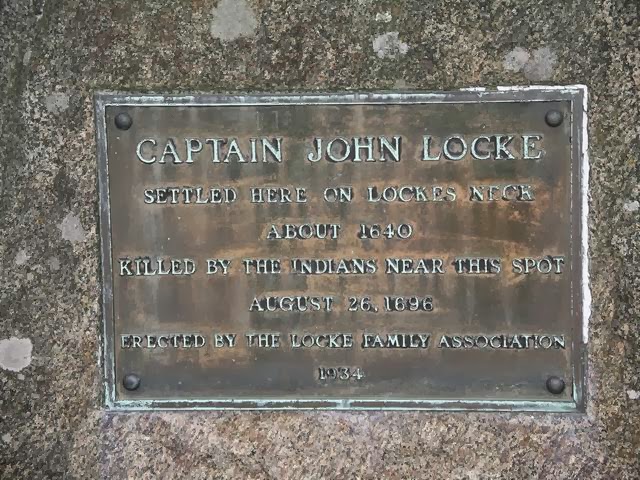
The William Berry Garrison (1649) was located at Sandy Beach on Washington Road. John Locke's Garrison  was on Locke's Neck. It was attacked in 1694.  
Strawbery Banke, was the original name for Portsmouth from 1630 to 1653. An outer defense fort was excavated in 1803 at the northeast corner of High Street and Market Square, now the Peirce Block. Portsmouth originally included Newington, Rye, New Castle (until 1693), and Greenland. The second Great House (1631 or 1634 - 1685) built by William Chadbourne for the Laconia Company was located on Water (Marcy) and Court Streets.  There were at least three other garrison houses: one at the head of Jacob Sheafe's Wharf on Water Street, the John Cutt Garrison on Market and Court Streets, and the Russell Garrison near the "Ferryways." None remain. Elsewhere in town were the Asa Ham Garrison (unknown date) at Bartlett Street on Islington Creek, the Plains Garrison (1690's) which was attacked in 1696, and the Henry Beck Garrison (1664) on the south-side of Sagamore Creek (west of the present-day bridge). Other houses included the Sherburne House (1695) now part of Strawbery Banke Museum.
The site now named Fort Constitution, a New Hampshire State Historic Site, was placed in 1631 and known as The Castle through 1666. From 1692 to 1775, the site was known as Fort (or Castle) William and Mary. The Castle was the site of the July 1713 meeting between the English and the "Eastern Indians."
Fort Star (1653 - 1776, intermittent), Star Island, Isles of Shoals -- A two-gun stone fort built as a defense against Indians and French. The site is west of the present hotel, facing the mainland. Rebuilt with 11 guns and regarrisoned in 1692 for King William's War, and later for Queen Anne's War. Regarrisoned again with nine guns in 1745 for King George's War. In 1776 the fort was dismantled and the settlers removed to the mainland. No remains.
1629           First "NH patent." Division of Gorges-Mason holdings at the Piscataqua River
1629-35       Laconia Company formed (Gorges/Mason) for inland fur trade. Focused on Piscataqua fishery until bankruptcy in 1635
1631           Stratham ("Winnicutt") established (incorporated 1716)

Rev John Wheelwright
1638 Founding of Exeter ("Squampscott") under Rev. John Wheelwright (brother-in-law to Anne Hutchison) following his expulsion from MA Bay April 3, 1638. Exeter originally included present-day Stratham, Newmarket, Newfields, Epping, and Brentwood. Exeter Garrison Houses -- John Gilman's Garrison (1690 or 1709) was built at the intersection of Water and Clifford Streets as a fortified house that protected an adjacent mill. The house was expanded in 1770. Restored in the 1950's, it is now owned by Historic New England and open for tours.
Edward Sewell's Garrison (1676), located on Epping Road, has been greatly altered over time. A town fort, the Great Fort, was located near the Meeting House (1695).
Hampton was founded in 1638, and included present-day North Hampton, Hampton Falls, Seabrook, South Hampton, Kensington, East Kingston, and Kingston Hampton Falls Garrison Houses -- Bonus Norton's Garrison (1700's) was located near the Hampton causeway on Lafayette Blvd. James Prescott's Garrison (1668 ?) (aka Prescott's Fort) was on Applecrest Farm. Daniel Tilton's Garrison (1667) was on Monument Square. 
Hampton Garrison Houses -- Thomas Philbrick's Garrison (before 1647 known as William Sanborn's Garrison) was torn down in 1855. Col. Joshua Wingate's Garrison (1700), later known as Edmund Toppan's Garrison, was located near Whittier's Corner, and demolished in 1900. The Hampton Meeting House was palisaded in 1689 following the attacks in Dover. It was enlarged in 1692 to allow room for small houses within the palisade.  John Dearborn's Garrison (1690's) in North Hampton was a settlers' garrison house located near the village green and the first town Meeting House (1734). Later known as Simon Dearborn's Garrison (1720's).
1638           Settlement of Greenland as parish of Portsmouth (incorporated 1704)
Greenland Garrison Houses -- Capt. Walter Neale's Garrison (1660's) was located on Heard's Neck near the mouth of the Winnicut River. It was the only recorded garrison house in town. The  Samuel Weeks' House (1638; rebuilt 1710), still standing, originally may have been another garrison house.


The Weeks House in Greenland NH.

1639           North Hampton settled
1641-43       Absorption of Dover and Portsmouth by Massachusetts for strategic value of Piscataqua River given Anglo-Dutch tensions (war 1652-54) and English Wabanaki tensions in Maine.
1643           Absorption of Exeter by Massachusetts
1659           Penacook (later Concord) settled
Concord Garrison Houses -- A town fort named Irish Fort (1725 - 1726) (or Penacook Fort 2) was at the old Penacook settlement, later renamed Rumford, then Concord. It was an outpost of Londonderry. A Penacook Indian fort was located on the east bank of the Merrimack River, probably on Sugar Ball Bluff. Col. Richard Waldron's Trading Post  (1667 - 1668), East Concord was located on the east side of the Merrimack River at or near the Penacook Indian village.
1664            Jackson House (Portsmouth NH) built.
 1665           Merrimack NH settled (established 1722)
1666-         The King's Commissioners order a fort to be built at Fort Point, New Castle, over the objections of the Mass Gen. Court. 1697: New Castle (NH) chartered as parish of Portsmouth
1669           Durham created as a parish of Dover (incorporated 1732) known as Oyster River Plantation until 1732.
Durham Garrison Houses -- There were 12 active garrison houses with 20 militia soldiers posted within at the time of the 1694 "Oyster River Massacre." Four were destroyed:
Francis Drew's Garrison (1640's ) at Drew's Point 
Thomas Edgerly's Garrison north of Meader's Creek
John Meader's Garrison (1660's) on Hill's Neck
Charles Adams' Garrison
Others survived:
William Beard's Garrison (also attacked in 1675) on Beard's Creek,
Lt. James (John) Davis' Garrison (1654) at the mouth of the Oyster River on Wagon Hill Farm (also survived 1689 attack),
Thomas Bickford's Garrison palisaded, on Durham Point,
James Bunker's Garrison (1650's) near Bunker's Creek (also survived 1689 attack)
Robert Burnham's Garrison
Stephen Jones' Garrison
(1672) on Jones' Creek

John Goddard's Garrison (1630's)
Valentine Hill's Garrison (built 1649), now incorporated into the Three Chimneys Inn,
Mathes' (Matthews') Garrison (survived 1694 attack),
Smith's Garrison (survived 1689 attack),
Capt. John Woodman's Garrison (1656 ) at the head of Beard's Creek (survived 1694 attack), burned in 1896, John Rand's Garrison and William Durgin's Garrison were built in 1695. Others included: Jonathan Chesley's Garrison (1716 ), Capt. Samuel Chesley's Garrison (1700 ), Philip Chesley's Garrison (1700 ), Joseph Chesley's Garrison (1707), George Chesley's Garrison (1699 ), David Davis' Garrison (2) (1720's ) at Packer's Falls (moved in 1790), Jabez Davis' Garrison (unknown date) one mile from the town,  the Pendergast Garrison (1737) near Packer's Falls,, and James Tilley's Garrison (1710's) near Packer's Falls.

In the 1690's, Newmarket -- Several garrison houses were located here, including the David Davis Garrison (1) (1695) on Lubberland Road. It was attacked in 1696, and was renamed Capt. John Smith's Garrison (1696). It was demolished in 1880. On the Lamprey River was Doe's Garrison (1650), which still existed when photographed by HABS in 1937.
1671           Congregational church gathered in Portsmouth under Joshua Moody
1680           Establishment of the royal province of New Hampshire
1680           Settlement at landing on Salmon River (later Rochester)
1681           Settlement at Newfields (part of Exeter)


Newfields Garrison Houses -- Capt. William Hilton's Garrison (1680), on Fowler's Hill, was a palisaded log house with a sentry box on the barn. Attacked in 1690. Demolished in 1822. Col. Edward Hilton's Garrison was attacked in 1706, It was later known as Col. Winthrop Hilton's Garrison. Aaron Rollins' Garrison was attacked in 1723, located near the lower falls of the Piscassic River. There was once another garrison house on the old Hall's Mill Road. The Hilton Family cemetery is located in Newfields. The Thyng Family cemetery is located on the Newfields/Exeter town line.


The Hilton family cemetery in Newfields NH.

 1689           Overthrow of Dominion of New England; temp return of NH to MA jurisdiction
1689-97       King William's War (War of the League of Augsburg)
1690           Lyndeborough established as "Salem-Canada"
1690           Newington established as "Bloody Point"  
Newington Garrison Houses -- Anthony Nutter's Garrison (1663) was at Welshman's Cove. Nicholas Harrison's Garrison was on Fox (Bloody) Point, renamed John Downing's Garrison in 1707. Lt. William Furber's Garrison (1690's) was at Welch Cove. John Dam's Garrison (1690's) was also at Welch Cove. Newington was known as Bloody Point until 1714.
1691           New Massachusetts provincial charter including all of Maine and Nova Scotia
1692           Re-establishment of royal government in NH
1694           Kingston established (5th NH town) – peace treaty w/Indians following King William's War
Kingston Garrison Houses (1700's), Kingston
Aaron Sleeper's Garrison (1700) was on Exeter Road. Tristram Sanborn's Garrison was west of Sleeper's.
1702           Accession of Queen Anne
1702-11       Queen Anne's War (War of the Spanish Succession)
1704           Greenland incorporated and Leonard Weeks constructs brick house (extant) 
1709            James Stackpole's or the Sligo Garrison (1709 ?) was on Sligo Road at "The Point".  Rollinsford, once known as Salmon Falls, was seperated from Somersworth in 1849.
1709          Gilman Garrison House built in Exeter, NH

Gilmam Garrison

1712           Meeting house (extant) built in Newington, NH
1713           Chester Wood (later Hooksett) established
1717           Addison (later Marlborough, chartered 1761) established
1718          Sayward-Wheeler House built in York Harbor, ME
1722           Rochester established -- There were five blockhouses built in 1744 at town expense, three on the road to Norway Plains (unnamed), Squamanagonic Blockhouse at Squamanagonic (present-day Gonic), and Newichawannock Blockhouse at the Newichawannock River (Salmon Falls River). There were several other private garrison houses in the area. Copp's Garrison, Goodwin's Garrison, Rawlins' Garrison, the Rev. Amos Main Garrison on Rochester Hill, and Richard Wentworth's Garrison were a few of the private garrison houses.

Ossipee Town Center

1725         Indian fort at "Wigwam Village" destroyed, rebuilt by English and town named Ossipee. Abenaki Fort (1650's - 1676), Center Ossipee-- An Abenaki one-acre log palisade built by British labor for protection against the Mohawks. It was destroyed by the colonial militia during King Philip's War. The site, owned by the Ossipee Historical Society, is at the Indian Mound Golf Club at Ossipee Lake.Capt. John Lovewell's Fort  (1722 - 1725), Center Ossipee -- A colonial militia fort. Weirs Blockhouse (1736), Weirs Beach A 14-foot square log blockhouse. This area was once a part of Gilmanton.Fort Winnipesaukee (1722), East Alton. A colonial militia fort was proposed for Fort Point on Alton Bay. It was to be 100 feet square, with two or four 14-foot square blockhouses at the corners. It was probably never built, due to lack of funds.
Derry Located in Derry Village and East Derry, which was once a part of old Londonderry Township, were Capt. James Gregg's Garrison, Samuel Barr's Garrison, and a few other garrison houses. A blockhouse was built next to the East Parish parsonage.
1726           Rye incorporated as parish of New Castle


1727           Nottingham-- A town blockhouse on the North River. It was attacked by Indians in 1747 and the defenders killed. A stone marker (1936) is on NH 152. (There is a "Fort Hill" northeast of town.)
1727           Settlement of Canterbury
1728           Settlement of Narragansett forts No. 3 (Amherst): Amherst Garrison Houses -- (1750's), Amherst There were seven garrison houses recorded in this area during 1753, as well as a town blockhouse. The town was never attacked by Indians. Amherst was originally known as Souhegan West.Milford Garrison Houses (1747), Milford--William Peabody's Garrison was located on the north-side of the Souhegan River (possibly located in Amherst), and William Colburn's Garrison was located in East Milford north of Long Pond. Milford was originally known as Monson. No. 4 (Goffstown)  No. 5 (Bedford) : Bedford Garrison Houses -- Located here were Capt. John Goffe's Garrison (1745) opposite Cohas Brook at Goff's Falls, Robert Walker's Garrison, and two other unnamed garrison houses. Bedford was originally known as Souhegan. Pembroke (No. ?) -- James Moore's Garrison (built 1730, fortified later) was said to be the first framed house built in the area. Rev. Aaron Whittemore's Garrison (1737 ?) was located south of the cemetery on Pembroke Street.
1733           Settlement of Arlington (later Winchester)
(1744 - 1745 or 1746), Winchester The town was attacked by Indians in 1745 or 1746, then abandoned until 1753. Most of the settlers' homes were palisaded, including Josiah Willard's Fort and Alexander's Fort.
1735           Settlement of Starkstown, Alstead, Gorhamtown, Piscataquog (later New Boston), Bakerstown (later Salisbury), New Ipswich
1735-36       Monadnock No. 1 (Mason), No. 2 (Jaffrey/Rindge/Dublin/Wilton/ Westmoreland) -- (1730's, 1740's), Westmoreland-- Great Meadows Fort (1730's), a square log blockhouse also known as Fort at Number Two Township. Also nearby was Daniel How's Fort (1740's). No. 3 (Arlington). No. 4 (Charlestown) -- Fort at Number 4  (1744 - 1760), Charlestown. A reconstruction of the fortified settlement known as Number Four Township, located on the Connecticut River. Also known as Fort Stephens in 1747 after Lt. Phineas Stephens. Attacked by the French in 1747. The settlement was named Charlestown in 1753. Used again during the American Revolution, it served as a staging point for Patriots heading to Bennington, Vermont in 1777.  No. 5 (Hopkinton/Roxbury), No. 6 (Henniker/Nelson), No. 7(Hillsborough/ Orford), No. 8 (Washington)


1736           Walpole settled: A large L-shaped log house, built in 1752, that was palisaded and armed with one gun. Another fort was built nearby along the Connecticut River to protect settlers going back and forth to North (Upper) Westminster, Vermont. This area was once Number Three Township. John Kilbourn Garrison (1749 - 1755), Walpole a palisaded settlers' home located about one-third mile south of the Cold River. It was attacked in 1755. Site marked with granite monument.
1736-47       Keene. Fort Keene  (1736 or 1738 - 1747),  A double-stockaded town fort that was 90 feet square, with 20 barracks and two wells. The town was attacked and burned by Indians in 1746. The settlers holed up in the fort for one year then abandoned the area, not returning until 1750 - 1752. Site located at 300 Main Street. The town was previously named Upper Ashuelot.Swanzey Garrison Houses -- (1738 - 1747), Swanzey-- Capt. Nathaniel Hammond's Garrison was palisaded, as was John Evan's Garrison (1). There was also Meeting-House Hill Fort. The town was abandoned in 1747 after several Indian attacks.
 1736-49       Land grants to soldiers returning from Canada: Rowley-Canada (Rindge), Sylvester-Canada (Richmond), Salem-Canada, Beverly-Canada (Weare)
1737           Hooksett.  A settlers' garrison house built.
1740-48       King George's War (War of the Austrian Succession)
1741           Settlement of MA-NH boundary and appt of Benning Wentworth as Governor of NH


Royal Governor Benning Wentworth's home in Portsmouth.
1741-49       Towns chartered by Wentworth: Atkinson,
Brentwood:  -- Stephen Dudley's Garrison (1684), torn down before 1835, undetermined location. Henry Marshall's Garrison (1705) at Marshall's Corner, Nicholas Dudley's Garrison (1720 ?) (son of Stephen) near Deer Hill, and William Graves' Garrison (1720's), demolished 1860's. Brentwood was seperated from Exeter in 1742.
Canterbury (est 1727), Dublin (Monadnock), Dunbarton (Starkstown est 1735), Effingham,
Epping (MA charter): (1740's ?) -- David Lawrence's Garrison was located by the railroad bridge. Richard Sanborn's Garrison was located at Red Oak Hill. There was a third garrison house elsewhere (undetermined location). None exist today.
Goffstown, Grantham, Hale's Location, Hampstead,


Hillsborough (1735) ­-- Hinsdale Garrison Houses -- Fort Hinsdale (1742) a blockhouse built on Ash Swamp Brook near Oak Hill to compliment Fort Dummer just across the river in Vermont. Also known as the Rev. Ebenezer Hinsdale Garrison (also spelled Hinsdell). Daniel Shattuck's Garrison (built 1736, fortified 1741 - 1748) (aka Fort Shattuck), was also located on Ash Swamp Brook. It was fortified by connecting it with a palisade to an identical structure on the other side of Ash Swamp Brook. John Evans' Garrison (2) (built 1741, fortified 1754) was located south of the Ashuelot River. Robert Cooper's Garrison (1737) was located near the Hinsdale Meeting House. Hinsdale Indian Fort An Indian fort was located on a hill by the Connecticut River, with a deep trench extending to the river.
Hollis:  (1740's), West Hollis-- A settlers' garrison house built in 1732, later fortified.

Hudson,  -- Hills' Garrison (1710) built by either Nathaniel Hills or Henry Hills. Site marked with stone monument. Joseph Blodgett's Garrison (1710's) was located about 2.5 miles south of the mouth of the Nashua River. Site marked with stone monument. John Taylor's Garrison was between Derry Road (NH 102) and Litchfield Road (NH 3A), about one-half mile south of the Hills Garrison. Capt. Robert Fletcher's Garrison (unknown date) once stood at the state line along the Merrimack River. Hudson and Pelham were known as Nottingham West in 1733, previously part of Dunstable (Nashua).
Jaffrey (Monadnock No. 2), Mason (No. 1),
Merrimack (1665, settled 1722):  A trading post for the Indian trade. The Penecook Indian village Naticook was here.
Middleton
Nashua (Dunstable): Nashua Garrison Houses -- The Cummings Garrison was located east of the Daniel Webster Highway and south of Split Brook. The Galusha Garrison was east of the railroad at the state line. The Harwood Garrison was south of (?) Brook along the Merrimack River. The Thomas Lund Garrison was east of the Daniel Webster Highway on the north-side of (?) Brook. The Queens Garrison was on Bowers Street. The John Solendine Garrison was near the Lund Garrison, possibly near Salmon Brook. The Rev. Thomas Weld Garrison was in South Nashua. The Whiting Garrison was on Robinson Road east of Salmon Brook. Nashua was originally known as Dunstable. The town was attacked by Indians in 1702. (1653 - unknown), Nashua-- A trading post for the Indian trade. The Penecook Indian village Wataunick was here.


New Durham (Cocheco), Newton, North Hampton (1639), Pelham, Plaistow, Rindge (Monadnock No. 1),  Salem (1736),
Sanbornton  (1746 - 1747), Sanbornton-- A six-walled colonial militia fort west of Winnisquam and north of East Tilton, on the north shore of Little Bay. The fort's stone blocks were later removed to build a dam on the lake.
South Hampton, Sutton, Tuftonboro, Warren, Wilton (No. 2, 1730s), Winchester (Arlington 1733), Windham
1746-48       Lt. Archibald Stark's Fort  Manchester -- A 125-foot square stockaded fort and blockhouse located on Baker Brook, on the northwest side of Nutt's Pond, in present-day Precourt Park. Built for the protection of the settlers of both Goff's Falls (Moore's Settlement) and Amoskeag Falls (Manchester). Site was marked in 1929. Foster's Garrison (1746) was located near Amoskeag Falls.
1749           Cocheco established (later New Durham)
1750           Peterborough Slip established (later Temple)
1751           Holderness settled
1753           Grenville established (later Newport)
1753           Buckingham established (later Unity)
1755           Madbury established-- Abraham Clark's Garrison (1693) demolished 1836, David Daniel's Garrison on David's Lane, Eli DeMerritt's Garrison (1720) demolished 1836, located near Pudding Hill, Capt. Paul Gerrish's Garrison, Daniel Meserve Jr.'s Garrison in Freetown on Harvey's Hill, William Tasker's Garrison (built 1693, fortified after 1694 Indian attack) on Moharimet's Hill, demolished 1820 ?, and William Twombly's Garrison (1730's) demolished 1842.
1760           Surrender of Canada/Accession of George III
1761-65       129 towns chartered by Royal Gov Benning Wentworth: Acworth, Albany, Alstead (1735), Amherst (Narragansett No. 3, 1728), Atkinson, Bath, Benton, Boscawan, Brookline, Campton, Canaan, Candia, Chatham, Colebrook, Columbia, Concord (Penacook, 1659), Conway, Cornish, Croyden, Dalton (Chiswick), Danville,
Deerfield:  (1743), Deerfield A settlers' garrison house once located south of town. Site is marked.
Dorchester, Dunbarton (Gorhamtown 1735), Eaton, Ellsworth, Enfield, Franconia (Indian Head), Fremont, Gilsum (1752), Goffstown (Narragansett No. 4), Goshen, Grafton, Grantham, Groton (Cockermouth), Hancock, Hanover, Harrisville, Haverhill (Lower Coos), Henniker (No. 6), Hillsborough (No. 7 1735), Holderness (1751),


Hooksett (Chester Wood, 1713): Chester Garrison Houses -- Benjamin Hills' Garrison (unknown date and location), and Major John Tolford's Garrison (1724) on Walnut Hill Road, torn down in 1883.
Hopkinton (No. 5, 1735): Hopkinton Garrison Houses -- Aaron Kimball's Garrison (1730's) was on Hopkinton Road east of town. Putney's Garrison (unknown date) was built by Samuel and John Putney on Putney's Hill west of town. Site is marked by stone tablet. David Woodwell's Garrison (unknown date) was located one-half mile east of Contoocook on NH 103. Site is marked.
Jaffrey (1736, Monadnock No. 2 1749),  Jefferson, Lancaster, Landaff, Lebanon,
Lee: -- There were garrison houses here during the 1680's. Also here was Capt. Nathaniel Randall's Garrison (1720's, demolished 1850), Joseph Doe's Garrison (1737), later renamed Elijah Fox's Garrison (demolished 1880), and the Jones' Garrison (1700) in Newtown.
Lempster, Lincoln, Lisbon, Lyman, Lyme,
Lyndeborough (Salem-Canada 1690), Lyndeborough Garrison (1740's) A town garrison or blockhouse was here for the protection of the settlers of Salem-Canada, the original name of the settlement.
Madbury (1755), Marlow (Addison, 1717), Mason (No. 1, 1741), Meredith (New Salem "Masonian" 1743), Moultonborough, Nelson (Monadnock, No. 6), New Hampton, New Boston (Piscataquog 1736), New Durham (Cocheco 1749), Newington (Bloody Point 1690s meeting house 1712), New Ipswich (1735), Newport (Grenville 1753), Northumberland (Stonington), Northwood, Orange (Cardigan), Orford (No. 7 , 1735),


Peterborough:  (1750's)-- A town fort or blockhouse was probably built here, garrisoned by 15 to 20 men, to protect the then-frontier settlement. The town was attacked by Indians in 1750, with the fort built afterwards.
Piermont, Plainfield, Raymond, Rindge (Monadnock No. 1, Rowley-Canada 1749),  Rumney, Salisbury (Bakerstown 1736), Sandwich,
Seabrook (1638 part of Hampton): -- Gove's Garrison (1703) was located near present-day Lafayette and New Zealand Roads. It no longer exists. Others may have also existed. Seabrook was once a part of Hampton, then Hampton Falls, until 1768.
Shelburne, Springfield (Protectworth),
Stratford: Stratford Fort (1768, 1775), Stratford -- The first Indian trading post on the northern frontier was established here in 1768. Site is marked. A settlers' log fort was built nearby in 1775.
Surrey, Tamworth, Temple (Peterborough Slip 1750), Thornton, Unity (Buckingham 1753)

Popular Post