Showing posts with label Nantucket. Show all posts

Thursday, February 16, 2017

Descendant of Starbuck Clan Rules Out Infamous First Tea Party of Nantucket and Romance Letter of Ruth Starbuck Wentworth

 Abe Books copy of Nantucket's First Tea published by The Inquirer and Mirror Press, Nantucket, 1907 (Authors Ruth Starbuck Wentworth and Roland B Hussey)

The above book along with a letter depicting a romance of a young girl and her suitor Captain Norris of Boston. The letter, allegedly written on September 20, 1747 by a direct descendant of the Nantucket Starbuck settlers, Ruth Starbuck Wentworth was published in almost every newspaper and magazine around the country. On bottom of this post is the full letter from 1920 The Denver Post---you can also read An Idyl from Nantucket This is an example how Genealogy and family tradition can be misinterpreted, as one descendant, Alexander Starbuck will point out in his attempt to sort through fact and fiction.
The contents of the letter mention a cousin, Nathaniel Starbuck, JR returning to Boston from a voyage to China. According to The Literary Digest Rebecca represents her grandfather as walking “restlessly up and down the yard" looking for the returning wanderer, and Uncle Nathaniel Starbuck Sr. remarking with pride, “The boy will have many stories to tell."
The Boston Transcript published this story under the heading of “The First Afternoon Tea-Party on Nantucket Isle," and THE DIGEST (issue of December 27) quoted from it under the heading of “Early American Love-Story Retold in an Old Letter." Alexander Starbuck, of Waltham, Mass, a direct descendant, in the seventh generation, of the Nathaniel Starbuck referred to in the story that as a piece of fiction he has no objection to it. “But when it poses as history,” he adds, “as it has in a hundred publications from Maine to California, I object." He forwards also a letter which appears under his name in The Inquirer and Mirror, of Nantucket, in which he presents the following details, as showing the story’s present stage of development: "Grandma" is knitting some stockings for Nathaniel, Jr., “to take on his next voyage." She writes of “Aunt Content” and "Aunt Esther," “Uncle Edward Starbuck's' family,” “Lieutenant Macy," and “Lydia Ann IvIacy," all of whom are to partake of cups of tea brewed from a part of the contents of a large box of the herb procured by Cousin “Nat” in China.
Aunt Content hung a five-gallon bellnietal kettle with a plentiful supply of water on the crane over the fire and dumped in two bowlfuls of tea, to which Aunt Esther added another bowlful for good measure. This mixture was “boiled down to about a gallon.”
When the company, of which there seems to have been a dozen or more, all provided with silver porringers belonging to "grandpa," had gathered to partake of this new refreshment, Cousin Nathaniel inspected it and told her that “a spoonful of this beverage would nearly kill any of us here at the table.”
They were then shown how properly to brew the tea and all went on happily ever after. The letter is dated from “Starbuck Plantation, near Madaket." and the party is assembled on December 31. “to sit the old year out and the new year in.”
Now if this story were only given out as pure fiction it is amusingly interesting,_lmt it is usually invested with a historical halo which is certainly misapplied. I have received many inquiries from time to time regarding it from parties who evidently believed it true. I have received already five letters regarding this particular article, which is only a reprint of what has traveled the rounds of the American press several times in the past thirty-five or forty years.
As a matter of fact, there is little (very little) truth about it, and it is as full of anachronisms as a sieve is full of holes. When Mr. Starbuck first became acquainted with the story, he writes, “it was a modest little affair, occupying the space of perhaps four inches, and published in the Nantucket Mirror of nearly fifty years ago."
Since then it has grown to such size that it has appeared in book form, “a very elaborate edition, really a work of art, largely in Old English text, and brilliantly illustrated in a manner that would assuredly have scandalized Nathaniel and Mary Starbuck and their descendants, nearly all of whom for a century wore the modest garb of Quakers." The writer continues: It is quite noteworthy that some versions of the story give its date as September 20, 1735, and others September 20, 1747, the most of them following the latter date. There was no “Starbuck Plantation" on Nantucket. The Ruth Starbuck Wentworth, the alleged writer, calls Nathaniel Starbuck, Sr., her uncle, so that it would naturally follow that she was a daughter of one of his sisters. He had three sisters: Dorcas Starbuck, who married William Gayer; Sarah Starbuck, who married Benjamin Austin; and Abigail Starbuck, who married (1) Peter Coffin and (2) Humphry Varney; so that no immediate niece of Nathaniel Starbuck, Sr., and cousin of Nathaniel Starbuck, Jr., could have been named Wentworth.
“Aunt Content” and “Aunt Esther” seem also to be unknown quantities in that generation, nor was there any “ Lieu tenant" Macy. Furthermore, no native of Nantucket or resident there was dignified or burdened or distinguished by a middle name for some years after that date.
It will be noticed, too, that this party assembled on December 31, “to sit the old year out and the new year in,” but at that time December was, as its name implies, the tenth month and the new year did not begin until after the middle of March.
Ruth dates her letter September 20, 1747. She is, by her own account, so young that her relatives think her hardly old enough to marry and there were not a few early marriages in those days. Indeed she writes that her cousin mentions her as the “little dumpling of a cousin that he used to toss in the air when he was last at home.”
Assuming, however, that she was nineteen, it is interesting to see where the story leaves us. She would have been ‘ born in 1728. The grandfather (Edward Starbuck), of whom she writes that he “walks restlessly up and down the yard," died in 1690, or thirty-eight years before she could have been born.
“Grandma” died many years prior to that, as nearly as I can determine prior to 1665. “Uncle Edward Starbuck" was a myth. The Uncle Nathaniel, who says “The boy will have many stories to tell," died in 1719, or nine years before ‘the voluble and imaginative Ruth saw the light of day, and twenty-eight years before the date of the letter.
Another interesting reference to this letter is posted an Ancestry.COM board by Elaine Coffin Rebori stating it was found in the papers of Leroy Franklin Dick after his death. It was copied by Mr. Dick who asserted it was written by Ruth Starbuck Wentworth who had left that Island for a New Settlement. This letter has been handed down from generation to generation until it has reached J.C. Starbuck of Carmel, Indiana.
Jim Starbuck responded to Rebori: "Since no one had a middle name or initial that early in our history, the J.C. is patently fictitious, and the New York Public Library long ago exposed this piece as fiction written by Robert Collyer."
Here is the family line: Nathaniel Starbuck, Sr., (1634-1719) was son of Edward Starbuck and Katharine Reynolds. He married Mary Coffin, daughter of Tristam Coffin and Dionis Stevens. Nathaniel, Sr. siblings  See full Records  Starbuck Genealogy Papers


Sources and Further Reading to check out
  • Edward Starbuck Minor Descent
  • The Literary Digest, Volume 64 Edward Jewitt Wheeler, Isaac Kaufman Funk, William Seaver Woods
  • Nathaniel Starbuck Lambert M Surhone, Mariam T Tennoe, Susan F Henssonow Betascript Publishing, May 17, 2011
  • Early Settlers of Nantucket: Their Associates and Descendants
  • Keeping History "So you say your great-great-great grandfather is Tristam Coffin":
    Using the Barney Genealogical Record Georgen Gilliam Charnes
  • Photo from Find A Grave contributor Bob Kenney, FIND A GRAVE MEMORIAL. Memorial to the founding mothers of Nantucket Island, erected in 2009 on Cliff Road in Nantucket, Nantucket, Massachusetts USA.
  • Historic Nantucket vol. 47, no. 1 (Winter 1998) The Eliza Starbuck Barney Genealogical Record Joan Elrick Clarke
  • 1296.-Edward-Starbuck
  • Starbuck Family by Bill Putnam
  • Nantucket Historical Association

Monday, February 1, 2016

Ida Whiteside Women Astronomer & Family

Looking for more information and Photos on Ida and family Thanks!


Ida Whiteside was the daughter of Albert Whiteside (1846-1916) and Nellie McClellan Pease (1862-1935) born in Cambridge, New York.  Records on parents marriage: 1861 Marriage Notices People’s Journal Greenwich, NY
At the country residence of the bride’s parents, at Buskirk’s Bridge, N.Y., Sept. 26th, by Rev. James L. Southard, Albert Whiteside, and Miss M. Ida Pease, daughter of A.S. Pease, Esq., of Saratoga Springs. Ida had two brothers  Henry Whiteside (1888-1945) and John Charles Whiteside (1893-1956)
South Cambridge New York Student Vassar 1904/05 AM 06 Harvard 1907-1909 teacher missionary Luxor Egypt
In 1908 The Wellesley College Magazine, Volume 17: A circular of Harvard University reports the discovery of a new variable star by Miss Ida Whiteside, of the Department of Astronomy at Wellesley.
Whiteside won a prize for a 1907 paper on the orbit of comet co-authored with Elizabeth Buchanan Cowley (1874–1945) an American mathematician.


General Catalogue of the Officers and Graduates of Vassar College, Volume 5 Vassar College
A history of Phineas Whiteside and his family

Thursday, June 4, 2015

Researcher tracks whaling ship that inspired 'Moby Dick' to Amesbury

Written by Amesbury historian Steve Klomps published in Newburyport News 

Sailors and maritime historians the world over know the story of the whale ship Essex, which sailed from Nantucket in 1819 only to be sunk by a whale, her crew set adrift and reduced to starvation and cannibalism.

The story fascinated 19th century America and caught the imagination of a struggling author — Herman Melville, who incorporated the Essex’s tragedy as the final climactic scene of his famed book, “Moby Dick.”

Growing up far from the ocean in suburban Chicago on a steady diet of sea tales and maritime history, Steve Klomps pored over the story, drawn in by the tale of adventure, disaster and survival against the odds.

Klomps didn’t become a sailor, but his career did eventually lead him to the Peabody Essex Museum in Salem, where he works as the museum’s director of finance, and to a riverfront home in Amesbury’s Pleasant Valley neighborhood. Transplanted to the fertile ground of coastal Massachusetts, Klomps’ youthful passion for maritime history has

blossomed into something verging on obsession. His research into local shipping history has taken him beyond the standard authoritative secondary texts and deep into original archives.

Among Klomps’ favorite topics is the shipbuilding history of the lower Merrimack Valley. While most histories of the area cite Newburyport as the local center for shipwrights, his research shows that before 1812, more ships were built on the north bank of the river in Amesbury.

“It was a huge industry — thousands of ships were built around here, and they ended up in all different corners of the world,” Klomps said.

Until last year, Klomps had no idea that the whaleship that had so captivated him in his youth also had an Amesbury connection. Last winter he received a letter from a man in North Carolina who wanted to build a model of the Essex and was looking for plans of the ship. The man believed that the Essex might have been built in the area and wondered if Klomps could help him.

“I had never heard of the Essex being built around here,” Klomps said. “When I started looking around, the first information I found was that it had been built down in Pembroke.”

Klomps kept digging, however, and soon found that to be wrong.

In the Newburyport Ship Register, he found the following entry: “Essex, ship, 238 tons; built Amesbury, 1799; length, 877 in.; breadth, 25 ft.; depth, 12 ft. 6 in. Reg. Oct. 11, 1799. William Bartlet, owner, George Jenkins, master.”

Of course, many ships in the area in those days were named the Essex, but the dimensions listed in the record matched those of the famous whaleboat. Still, Klomps knew from earlier research that William Bartlet, the owner, was a merchant, not a whaling tycoon. So he kept digging.

The next mention Klomps could find of the Essex put it in Nantucket under new ownership in 1804. It had been converted from a merchant vessel to a whaling ship. The Essex appeared repeatedly in the records of the Nantucket whaling fleet, under different captains and ownership, until its fateful departure in 1819.

There are no surviving plans for ships built in Amesbury during this period, but based on his knowledge of similar ships, Klomps was able to give the model-builder some guidelines of what the Essex must have looked like. In return, he had found another thread tying Amesbury to the complex web of global commerce in the 19th century.

“The thing I love about this research is you never know where it’s going to take you,” Klomps said. “It’s amazing that a town of 3,000 people could have been so industrious. Amesbury was the second-largest source of ships in the Boston registry during this time. There were more Amesbury-built ships in Salem than there were ships built in Salem. Amesbury shows up everywhere.”

Thursday, October 2, 2014

Abbie A Coffin

Abby/Abbie Ann Coffin, daughter of Enoch Coffin and Abigail Worth Coffin Enoch son of Hezekiah and Anna Hale
Hezekiah son of Eliphalet and Lydia Emery
Eliphalet son of  son of John and Hannah Cheney
John son of Stephen and Sarah Atkinson
Stephen son Tristram, JR and Judith Greenleaf
Tristram, Jr. son of Tristram, SR and Dionius Stevens
Abby was born September 2, 1839 in Newbury MA she lived to be 94 according to her obit, however the September article states the prior year she was 94 so someone had it wrong. If you do the math she was 95. She passed on March 16, 1934


Tuesday, July 29, 2014

Captain Roland Folger Coffin's Funeral

                                                  
                                                    Grave: From Prospect Hill Cemetery 


                                          From the New York Times July 21 1888


Captain Coffin---journalist, was born in Brooklyn, N.Y., March 8. 1826. He spent his youth at Nantucket, Mass., and became a sailor. He was captain of the ship Senator, 1850-60, and in the latter year joined the U.S. navy as acting master, serving in the North Atlantic blockading squadron. 1861-63. In 1869 he published .1n Old Sailor's Yarns. He became a reporter of marine news and yachting and was a contributor to the daily New York journals. He published Straws (1859); The America's Cup: How it was Won by the Yacht America in 1851 and has Since been Defended (1885); History of American Yachting (1886). He died on Shelter island. Suffolk county, N.Y.. July 17, 1888 See More "Proceedings of the Nantucket Historical Association," Volumes 21-25

From  Outing: Sport, Adventure, Travel, Fiction, Volume 12
As we go to press, we learn with profound sorrow of the death of Capt. Roland Folger Coffin, our highly esteemed yachting editor. Captain Coffin died in harness; he was at the time fulfilling his duties as yachting reporter to the World and Outing.

Alas ! the pen of Captain Coffin lies silent now. Little did we think then that the articles he brought us, three days before the end came, would be the last precious gifts of this prolific marine writer, and that OUTING inherited in these contributions the most mature thought of Roland Folger Coffin.
In this and the remaining numbers of this year's OUTING these valuable articles will appear, and no one who ever " broke the unknown sea " and trusted his life "to the licentious winds" will pass these pages by. The closing article will be enriched by a short but exhaustive sketch of Captain Cofiin-a man who was born near the sea and.....


 July 18, 1888 New York Times


Grave Lot 136  Captain Roland Folger Coffin. March 8, 1826 - July 17, 1888.
Roland was the son of Hezediah Coffin and Sally Bunker Coffin. He married Elizabeth Starbuck the daughter of Captain Obed Starbuck. He was master of the ship Senator. During the Civil War, he served in the U.S. Navy in the North Atlantic Blockading Squadron. He was a reporter for The New York World and a yachting reporter for the sports journal Outing. Captain Coffin was the author of  An Old Sailor's Yarns published by Funk and Wagnells, New York in 1884 and The America's Cup. How It Was Won By The Yacht America In 1851 And Has Been Since Defended published by Charles Scribner's Sons, New York in 1885. In the preface of the later book ,Captain Coffin writes of his ambition:
"Retire to Nantucket, and become a happy owner of a twenty-foot cat-boat, the fastest in the harbor".
Captain Roland Coffin's co-workers at The New York World purchased his memorial at Prospect Hill as a tribute to their departed friend.

Sunday, March 30, 2014

Thomas Macy and George Peaslee Powow preacher spats with Puritans

My story in Newburyport News with added news clips and pictures


Powow preacher spats with Puritans
During preparations for a visit to the Macy-Colby house in Amesbury next month, research led to some intriguing court documents that divulge the spiritual squabbles surrounding Thomas Macy, the first to occupy the dwelling in 1649.

Although listed in early deeds as a “merchant” and “Clothier,” Macy’s “great energy and determined will” earned him multiple positions of rank including that of town clerk, deputy to the General Court, and overseer of highways and schools. Macy also received a grant for a sawmill on “the west side of the Powow, with the privilege of using all the timber on the common.”

By all accounts, Macy appeared to be a golden boy with the Puritan power heads, except on matters of prayer. In fact, he openly defied them by preaching with Joseph Peaslee in separate assembly from the authorized Sabbath. This did not go over well with Puritan officials, who deemed it “unfit preaching” and charged the two provocateurs with “exhorting the people on the Sabbath in the absence of an ordained minister.” The General Court had passed a law in prohibiting preaching “except by leave of the authorities.”

Since Master Macy was not the sort of fellow to be trifled with, he made it very clear that his faith would not be dictated to him and “Brother Peaslee, brave confessor” was not about to rob followers of “gifted” sermons. This surge of passion animated another pet of the Puritan fold, Robert Pike, who held high public offices.  Picture of Pike below


Pike spoke out against “restraining unfit persons from constant preaching” and engaged on a crusade against the civil tribunal, asserting they “had violated their oaths as freeman; that their act was against the liberty of the country, both civil and ecclesiastical, and that he stood ready to make his declaration good.”

The provoked court arraigned the “culprit who thus dared to insult their majesty.” A series of petitions were filed to release Pike from his charges. Notables from several towns signed, and the court ordered commissioners to gather “incorrigibles” to give reason on why they were “induced to subscribe” to such a defiance. Pike waged on, accusing the leaders of “assailing magisterial authority and dignity.”

Certain commissioners who sided with Pike, such as Thomas Bradbury and William Gerrish, retracted to avoid trouble with the boss-men magistrates. Most became “refractory spirits” and were fined for turning on God’s chosen officials, but 15 men stood their ground after the officials finished their hunt.

Here are a few of the loyal souls who held up their conviction to the court: John Bishop “desired to go to the meeting house and turned his back and went away” (QC 1:367). John Emery and John Bond refusing to comply and did so in “a bold, flouting manner.” Benjamin Swett replied, “Every free subject hath liberty to petition for any that had been in esteem, without offence to any; and the petition itself hath answer in itself sufficient.” John Wolott agreed if he “be called to [a higher] power to answer, he will then answer and so went away very highly” (368).

In 1657, Macy found himself in further turmoil for sheltering traveling Quakers in his barn during a fierce rain storm. For this brief hour of gracious harbor he was ordered to appear in court, but he sent the officials a letter instead.

In 1658, “certain inhabitants” (Macy and Peaslee) filed a petition to break off from the official church of Reverend Worcester, but it was denied. The court demanded attendance to the true fellowship, and fines were issued to the flock of dissenters for “slighting and neglecting the order” and “disorderly practices.” However, Peaslee preached on as the “Come-outer,” and Pike, “the moral and fearless hero of New England,” fought injustice against Quakers and accused witches.

Macy sought religious refuge on a voyage recalled in Whittier’s poem, “The Exiles.” Macy legend states that his wife, Sarah, pleaded with him above the cries of their five tots to curtail his warrior spirit and sail away from an evil storm brewing, but he just replied, “Woman, go below and seek thy God. I fear not the witches on earth, nor the devils in hell.”

The crew made it to safety to Nantucket, where Macy took an active role in negotiating the purchase of the island.

Thomas Mayhew sold it for 30 pounds sterling and two beaver hats.

Although Macy was accused of skirting the Mass Bay despots, this sturdy pioneer preacher consciously chose not to accept laws that openly engaged in religious persecution.

With that said, no one could accuse this pulpiteer of missing his true calling where “charity and freedom dwell,” so “Let the dim shadows of the past” be a reminder for today.


Links and sources to check out
History of Essex County, Massachusetts: With Biographical Sketches, Volume 1 edited by Duane Hamilton
Proceedings of the Annual Meeting of the Nantucket Historical Association 
Thoughts and Experiences in and Out of School By John Bradley Peaslee
The New England Magazine, Volume 22Genealogy of the Maulsby Family for Five Generations, 1699-1902: Compiled by Careful Research Among Quaker, Government and Family Records by Patty Payne
The Essex Antiquarian, Volume 8 edited by Sidney Perley
Genealogy of the Macy Family from 1635-1868 By Silvanus J. Macy
Away Off Shore: Nantucket Island and Its People, 1602-1890 By Nathaniel Philbrick
The Successful American, Volume 1, Part 1 - Volume 2, Part 1
The Coffin Family: The Life of Tristram Coffyn, of Nantucket, Mass., Founder of the Family Line in America; Together with Reminiscences and Anecdotes of Some of His Numerous Descendants, and Some Historical Information Concerning the Ancient Families Named Coffyn
Nantucket Genealogies By Alexander Starbuck
The New Puritan: New England Two Hundred Years Ago: Some Account of the Life By James Shepherd Pike
Early Settlers of Nantucket: Their Associates and Descendants edited by Lydia Swain Mitchell HinchmanGenealogical and Personal Memoirs
The Old Families of Salisbury and Amesbury, Massachusetts By David Webster Hoyt
The Churchman, Volume 39
Nantucket Historical Commission
Miner Descent 
Pike Family
Coffin Family Story
Coffin Family History
Lucrtia Mott Coffin

ALL ARTICLES PDF CAN BE SENT VIA EMAIL

The Settlement Of Nantucket

Date: Saturday, December 31, 1831
Paper: Nantucket Inquirer (Nantucket, MA)
Page: 2 


200 Years Old but Nantucket Celebrates Its Centennial Only Island T Own En Fete a Notable Program of Addresses

Date: Wednesday, July 10, 1895
Paper: Worcester Daily Spy (Worcester, MA)
Page: 3, 1 

Nantucket Island
Date: Monday, August 4, 1873 Paper: Public Ledger (Philadelphia, PA)
Volume: LXXV    Issue: 113 Page: 2


From Saturday, July 9, 1836 Paper: Norfolk Advertiser (Dedham, MA)
Volume: VI   Issue: 28 Page: 1


The First White Settler in Nantucket

Date: Tuesday, August 23, 1842
Paper: Boston Evening Transcript (Boston, MA)
Volume: XIII   Issue: 3705 Page: 2 


Tuesday, January 7, 2014

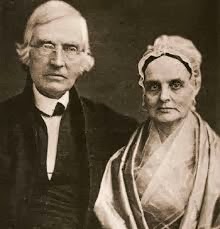
Lucretia Coffin Mott

by John M. Switlik of  Thomas Gardner Society
Melissa Berry added pictures and credit to sources 


Thomas' descendants list contains many social reformers. Lucretia (Coffin) Mott (January 3, 1793 – November 11, 1880) stands out for her activism activities, such as co-founding the Pennsylvania Anti-slavery Society and the American Equal Rights Association. Picture from  Yesterday Island


She spoke at the International Anti-Slavery Convention that was held in London, England in 1840. She, along with other women attendees such as Baroness Byron, was included in the commemorative painting of the convention.


                                                             Lucretia and James Mott

 Lucretia was a descendant of Thomas and Margaret through son Richard. Both of her parents Thomas Coffin and Anna Folger were from families who arrived early to New England.
Anna Folger b. 25 March 1771, d. 26 March 1844 daughter of William Folger b. 24 Jul 1728, d. 4 Jun 1815 and Ruth Coffin b. 9 Apr 1733, d. 11 Mar 1814
Thomas Coffin, son of Benjamin Coffin and Deborah Macy, in 1789; (m. in 12-1789). Anna Folger died on 26 March 1844 at Philadelphia at age 73.  Nantucket Historical Full Genealogy
She grew up on Nantucket Island and then attended a Quaker School in New York (Nine Partners Meeting House and Cemetery). After graduating, she also taught at the school which is where she met her husband James Mott (20 June 1788 – 26 January 1868). Lucretia, in 1864, helped found Swarthmore College.
Credit: Courtesy of Friends Historical Library of Swarthmore College.
"Roadside" – residence of Lucretia Mott,1319 Chestnut St., Philadelphia Old York Road (now Fairmont Park) Lucretia Mott is in the chair in the foreground.


 From  Mott Project


Wednesday, December 4, 2013

Mary Coffin Strarbuck, Daughter of the Light

Some information on Mary Coffin/Coffyn Starbuck (1645-1717) and family. Plus some old articles published in newspapers on Coffin line.


Mary's father, Tristram Coffin
Mary Coffin Starbuck was born Feb. 20, 1645 in Haverhill, Massachusetts. She was the daughter of Tristram Coffin (1605-1681) and Dionis Stevens Coffin (1610-1659) 

Cortlandt V. D. Hubbard, Photographer


In 1662, Mary married Nathaniel Starbuck (born in Dover, NH  February 20, 1634) son of Edward Starbuck and Katherine Reynolds. (Note: Nathaniel's sister Abigail Starbuck married Peter Coffin, Mary's brother) Mary and Nathaniel were the first couple to marry on the Island from the new settlement created by these families. The couple also became the leaders in introducing the Quaker faith to the island. Mary was the first woman Quaker minister. She was also called "The Great Merchant" an industrious, clever, and powerful woman. In 1702, John Richardson, a Quaker minister, was speaking at her home and she received a witness that manifested into a deep spiritual driving force of Light that never extinguished. It was in this moment Nathaniel Philbrick asserts that "established a unique fusion of spirituality and covetousness that would make possible Nantucket's rise as a whaling port." Several generations prosper in this industry as well as others.

Mary was a leader--a woman of "strong character and exceptional intelligence." Edward R. Snow Women of the Sea   "The islanders esteemed [Mary Starbuck] as a judge among them, for little was done without her, as I understood...the great woman," 1701 journal entry of John Richardson

She is also known for "Account Book with the Indians," a ledger tracking the credits and debits of 200 Indians, laborers, and whales-men who patronized Mary Coffin Starbuck's store and her later generations, it is a "treasure trove of data about Indian life on Nantucket...covering the years 1662 to1764..."

John Greenleaf Whittier, (1807-1892) the poet, is a 7th generation Coffin, descended from Tristram Coffin, Jr.
 [Manuscript deed of sale (November 14, 1685) of Nashowamoiasuk, now Neck Point of the Edgartown Great Pond, by "Mr. Harrie, Indian of Nantucket" to John Coffin (Mary's brother) for six pounds.From Mr. Larry @4dtraveler]


Below is from The Springfield Daily Republican September 1929


Our Boston Literary Letter. Good Folks and Persecutors. Covenanters, Quakers and Martyrs Andrew Lang's New March 17, 1909 Springfield Republican (Springfield, MA) A larger PDF version can be sent if you post a request or email me


Popular Post