A Share from Barbara Wells Sarudy and her blog
American Garden History Blog
Most colonists planted at least a few fruit trees or a
larger orchard as soon as possible, when they settled on their land. An
orchard is an enclosed garden used to grow fruit trees which provided
both food and drink to the colonial family.
Cider was one of the most important drinks of the colonial period.
Growing barley for beer, or any other traditional European grains that
the settlers might have been accustomed to raising, required the use of a
plow. Because the colonists' lands were freshly cleared; stumps
remained dotting the landscape, and the use of a plow was nearly
impossible.
In 1655, Adrian Van der Donck observed,
"The
Netherlands settlers, who are lovers of fruit, on observing that the
climate was suitable to the production of fruit trees, have brought over
and planted various kinds of apples and pear trees which thrive
well...The English have brought over the first quinces, and we have also
brought over stocks and seed which thrive well and produce large
orchards."

In Jamestown, Virginia, it was reported that by 1656,
"Orchards innumerable were planted and preserved."
Jamestown, more than many other settlements, needed to grow domestic
fruit to convert into a safe liquid to drink. Illness was a serious
problem in early Jamestown due, in part, to the settlers' drinking water
from shallow wells often polluted by the risky high water table. The
colonists did not seem to mind the mellowing alcohol content of the
quickly fermented apple juice either.
A 1 to 6 acre apple orchard became a rather common feature on farmsteads
& plantations in the British American colonies. Apples were grown
primarily for their juice, which was the most common colonial beverage
of choice, because well-water generally was regarded as unsafe. Everyone
in the family drank the hard cider year-round, and most families
produced 20 to 50 barrels of cider each autumn for their own consumption
& to use as barter for other goods & services.
 Peach Blossoms
Some settlers also converted distilled cider into
"applejack," which
was even stronger than hard cider. The first hand-cranked cider mills
appeared in the colonies around 1745. Prior to this cider was made by
pounding apples in a trough & draining the pomace.
Gabriel Thomas wrote of Pennsylvania in 1698,
"There
are many Fair and Great Brick Houses on the outside of the Town which
the Gentry have built for their Countrey Houses... having a very fine
and delightful Garden and Orchard adjoining it, wherein is variety of
Fruits, Herbs, and Flowers."
On a visit to Williamsburg, Virginia, in 1722, Hugh Jones noted that,
"the
Palace or Governor's House, a magnificent structure built at the
publick Expense, finished and beautified with Gates, fine
Gardens...Orchards."
A house-for-sale adverisement in the South Carolina Gazette in June of
1736, in Charleston, touted the orchard as a strong selling enticement,
"To
be Sold A Plantation containing 200 Acres...An orchard well planted
with peach, apple, cherry, fig and plumb trees: a vineyard of about two
years grownth planted with 1200 vines: a nursery of 5 or 600 mulberry
trees about two years old, fit to plant out."
 Pear Blossoms
In April of 1742, Eliza Lucas Pinckney wrote in South Carolina,
"I
have planted a large figg orchard with desighn to dry and export them. I
have reckoned my expense and the prophets to arise from these figgs."
Peter Kalm noted on his travels through North America on September 18, 1748,
"Every
countryman, even a common peasant, has commonly an orchard near his
house, in which all sorts of fruit, such a peaches, apples, pears,
cherries, and others are in plenty."
By the middle of the 18th century, a wide variety of orchard trees was
available to the general public. William Smith advertised trees he was
growing in his nursery in Surry County, Virginia, in the 1755
Williamsburg newspaper, as did Thomas Sorsby of Surry County in 1763.

In 1755, orchardist William Smith offered,
"Hughs’s
Crab, Bray’s White Apple, Newton Pippin, Golden Pippin, French Pippin,
Dutch Pippin, Clark’s Pearmain, Royal Pearmain, Baker’s Pearmain, Lone’s
Pearmain, Father Abraham, Harrison’s Red, Ruffin’s large Cheese Apple,
Baker’s Nonsuch, Ludwell’s Seedling, Golden Russet, Nonpareil, May
Apple, Summer Codling, Winter Codling, Gillefe’s Cyder Apple, Green Gage
Plumb, Bonum Magnum Plumb, Orleans Plumb, Imperial Plumb, Damascene
Plumb, May Pear, Holt’s Sugar Pear, Autumn Bergamot Pear, Summer Pear,
Winter Bergamot, Orange Bergamot, Mount Sir John, Pound Pear, Burr de
Roy, Black Heart Cherry, May Duke Cherry, John Edmond’s Nonsuch Cherry,
White Heart Cherry, Carnation Cherry, Kentish Cherry, Marrello Cherry,
Double Blossom Cherry, Double Blossom Peaches, Filberts Red &
White."
Nurseryman Thomas Sorsby had available in 1763,
"Best
cheese apple, long stems, Pamunkey, Eppes, Newtown pippins, Bray’s
white apples, Clark’s pearmains, Lightfoot’s Father Abrahams, Sorsby’s
Father Abrahams, Lightfoot’s Hughes, Sorsby’s Hughes, Ellis’s Hughes,
New-York Yellow apples, Golden russeteens, Westbrook’s Sammons’s, horse
apples, royal pearmains, a choice red apple, best May apples, Sally
Gray’s apple, Old .England apple, green apple, Harvey’s apple, peach
trees [Prunus persica], and cherry trees."
In 1756, from Annapolis, Maryland, Elizabeth Brook wrote to her son
Charles Carroll, who was attending school in England and France,
"This place... is greatly improved, a fine, flourishing orchard with a variety of choice fruit."
Charles Carroll of Annapolis and his son annually put away vast
quantities of cider for their family and servants. In 1775, the elder
Carroll put away 190 casks of "cyder" (he estimated 22,800 gallons) for
the coming year.
 Apple Blossoms
Peter Hatch, who managed
Monticello's grounds, reports that,
"between
1769 & 1814 Thomas Jefferson planted as many as 1,031 fruit trees
in his South Orchard. This orchard formed a horseshoe-shape around the
two vineyards & berry squares. It was organized into a grid pattern,
in which he planted 18 varieties of apple, 38 of peach, 14 cherry, 12
pear, 27 plum, 4 nectarine, 7 almond, 6 apricot, and a quince.
"The earliest plantings, before 1780, reflect the experimental orchard
of a young man eager to import Mediterranean culture to Virginia, and
included olives, almonds, pomegranates, & figs. However, the mature
plantings after 1810, included mostly species & varieties that
either thrived through the hot, humid summers & cold, rainy winters
of central Virginia, such as seedling late-season peaches or Virginia
cider apples."
In 1782, Michel Guillaume Jean de Crèvecœur (1735–1813) described drying
apple slices on wooden platforms erected on poles. The fruit was spread
out on wooden boards, where it was soon covered with
"all the bees and wasps and sucking insects of the neighborhood,"
which he felt accelerated the drying process. The dried apples were
used in preparing a variety of dishes throughout the year. Peaches &
plums were also dried but were considered more of a delicacy & were
saved for special occasions. Many families stored their dried apples in
bags hung high in building rafters to keep them dry & away from
mice.
J. F. D. Smyth described Williamsburg, Virginia, in 1784,
"Plantations
are generally from one to four or five miles distant from each other,
having a dwelling house in the middle... at some little distance there
are always large peach and apple orchards."

In 1796, New Englander Amelia Simmons published the first truly American cookbook,
American Cookery. Her view of the raising of apples had more to do with morality than with functionality.
"Apples
are still more various, yet rigidly retain their own species, and are
highly useful in families, and ought to be more universally cultivated,
excepting in the compactest cities. There is not a single family but
might set a tree in some otherwise useless spot, which might serve the
two fold use of shade and fruit; on which 12 or 14 kinds of fruit trees
might easily be engrafted, and essentially preserve the orchard from the
intrusions of boys, &c. which is too common in America.
If the boy who thus planted a tree, and guarded and protected it in a
useless corner, and carefully engrafted different fruits, was to be
indulged free access into orchards, whilst the neglectful boy was
prohibited--how many millions of fruit trees would spring into
growth--and what a saving to the union. The net saving would in time
extinguish the public debt, and enrich our cookery."

English agriculturalist Richard Parkinson noted in 1798, Baltimore, Maryland,
"My orchard contained about six acres, three of which were planted with apples, the other three with peaches of various sorts."
In the 1790s, Captain John ODonnell (1749-1805) settled in Baltimore,
Maryland, naming his country seat after his favorite port of call,
Canton. And account of
Canton
given by a visitor noted that O"Donnell had planted orchards of red
peaches on his 2500 acre estate in hopes of manufacturing brandy for
trade but had met with limited financial success.
"For although Mr. O'Donnell's
orchard had come to bear in great perfection and he had stills and the
other necessary apparatus, the profit proved so small that he suffered
the whole to go to waste and his pigs to consume the product."

A house-for-sale advertisement in the 1800
Federal Gazette in Baltimore, Maryland, described,
"That
beautiful, healthy and highly improved seat, within one mile of the
city of Baltimore, called Willow Brook, containing about 26 acres of
land, the whole of which is under a good post and rail fence, divided
and laid off into grass lots, orchards, garden...The garden and orchard
abounds with the greatest variety of the choicest fruit trees, shrubs,
flowers...collected from the best nurseries in America and from Europe,
all in perfection and full bearing."
Rosalie Stier Calvert devoted a great deal of attention to establishing an orchard at her home
Riversdale in Prince George County, Maryland. In 1804, she
“planted
a large number of all the varieties of young fruit trees I could find,
and I am going to fill the orchard with young apple trees everywhere
there is room.”
She worried that
“it is impossible to buy any good pear trees from the nurseries. They sell bad pears under good names.” She
first asked her father to send her peaches & pears from Europe, but
soon realized it would not be practical. Instead, her father suggested
that she buy pear trees in Alexandria, Virginia, for her garden
“which had real soil for pears,” and water them with buckets of cow urine. She had already transplanted
“a Seigneur pear tree,” which her father had grafted in Annapolis.
By 1805, she wrote,
“We are
getting much better at the art of gardening, especially with fruit trees
which we planted a large collection of this year. You would scarcely
recognize the orchard. The manure which was applied there in 1803
improved it greatly, and young trees have been planted where needed.” In addition to fruit trees, she planted currants & raspberries in her orchard.
Keeping apples overwinter in America during the 18th & 19th
centuries was important and theories abounded about the proper method.
New Yorker John Nicholson wrote in
The Farmer's Assistant in 1820,
"In
gathering apples, for Winter-use, they should be picked from the tree,
and laid carefully in a heap, under cover, without being bruised. After
they have sweated, let them be exposed to the air and well dried, by
wiping them with dry cloths; then lay them away in a dry place where
they will hot freeze. The time requisite for sweating will be six, ten,
or fifteen days, according to the warmth of the weather.
The fruit should not be gathered till fully ripe, which is known by the stem parting easily from the twig. It should also be gathered in dry weather and when the dew is off...
"It is confidently asserted by many, that apples may be safely kept in casks through Winter, in a cold chamber, or garret, by being merely covered with Linen cloths."
John Beale Bordley had written
An Epitome of Mr. Forsyth's Treatise on the Culture and Management of Fruit Trees in 1804, noting that William Forsyth wrote
"the
most complete method of saving them, so as to preserve them the
greatest length of time, is to wrap them in paper and pack them away in
stone jars between layers of bran; having the mouths of the jars covered
so close as to preclude the admission of air, and then keep them in a
dry place where they will not be frozen."
In the 1790s, Samuel Deane wrote in his New England Farmer of his method of preserving Winter apples, "I gather them about noon on the day of the full of the moon which happens in the latter part of September, or beginning of October. Then spread them in a chamber, or garret, where they lie till about the last of November. Then, at a time when the weather is dry, remove them into casks, or boxes, in the cellar, out of the way of the frosts; but I prefer a cool part of the cellar. With this management, I find I can keep them till the last of May, so well that not one in fifty will rot...
"In the Autumn of 1793, I packed apples in the shavings of pine, so that they scarcely touched one another. They kept well till some time in May following; though they were a sort which are mellow for eating in December. Dry sawdust might perhaps answer the end as well. Some barrel them up, and keep them through the Winter in upper rooms, covering them with blankets or mats, to prevent freezing. Dry places are best for them."

New Yorker John Nicholson suggested some amazing cures--including chalk,
bloody meat, raw eggs, & milk--for American cider in
The Farmer's Assistant in 1820,
"Cider
may be kept for years in casks, without fermenting, by burying them
deeply under ground, or immersing them in spring water; and when taken
up the cider will be very fine.
"A drink, called cider-royal, is made of the best runing of the cheese,
well clarified, with six or eight gallons of French brandy, or good
cider brandy, added to a barrel: Let the vessel be filled full, bunged
tight, and set in a cool cellar, and in the course of a twelvemonth it
will be a fine drink. If good rectified whiskey be used, instead of
brandy, it will answer very well.
"A quart of honey, or molasses, and a quart of brandy, or other spirits,
added to a barrel of cider, will improve the liquor very much, and will
restore that which has become too flat and insipid. To prevent its
becoming pricked, or to cure it when it is so, put a little pearl-ashes,
or other mild alkali, into the cask. A lump of chalk broken in pieces,
and thrown in, is also good. Salt of tartar, when the cider is about to
be used, is also recommended.
"To refine cider, and give it a fine amber-color, the following method
is much approved of. Take the whites of 6 eggs, with a handful of fine
beach sand, washed clean; stir them well together; then boil a quart of
molasses down to a candy, and cool it by pouring in cider, and put this,
together with the eggs and sand, into a barrel of cider, and mix the
whole well together. When thus managed, it will keep for many years.
Molasses alone will also refine cider, and give it a higher color; but,
to prevent the molasses making it prick, let an equal quantity of brandy
be added to it. Skim-milk, with some lime slacked in it, and mixed with
it, or with the white of eggs with the shells broken in, is also good
for clarifying all liquors, when well mixed with them. A piece of fresh
bloody meat, put into the cask, will also refine the liquor and serve
tor it to feed on.
"To prevent the fermentation of cider, let the cask be first strongly
fumigated with burnt sulphur; then put in some of the cider, burn more
sulphur in the cask, stop it tight and shake the whole up together; fill
the cask, bung it tight, and put it away in a cool cellar.
"To bring on a fermentation, take 3 pints of yeast for a hogshead, add
as much jalup as will lie on a sixpence, mix them with some of the
cider, beat the mass up till it is frothy, then pour it into the cask,
and stir it up well. Keep the vessel full, and the bung open, for the
froth and foul stuff to work out. In about 15 days, the froth will be
clean and white; then, to stop the fermentation, rack the cider off into
a clean vessel, add two gallons ot brandy, or well-rectified whiskey,
to it, and bung it up. Let the cask be full, and keep the venthole open
for a day or two. By this process, cider that is poor, and ill-tasted,
may be wonderfully improved...
"To cure oily cider, take one ounce of salt of tartar, and two and a
half of sweet spirit of nitre, in a gallon of milk, for a hogshead. To
cure ropy cider, take six pounds of powdered allum, and stir it into a
hogshead; then rack it off and clarify it.
"To color cider, take a quarter of a pound of sugar, burnt black, and
dissolved in half a pint of hot water, for a hogshead; add a quarter of
an ounce of allum, to set the color.
"Cider-brandy mixed with an equal quantity of honey, or clarified sugar,
is much recommended by some lor improving common cider; so that, when
refined, it may be made as strong, and as pleasant, as the most of
wines."
Portraits of Americans with Fruit Grown on Trees
Throughout the 18th century, artists painted portraits of British
colonials & early Americans holding fruits that the viewer might
reasonably suppose came from the trees in their orchards. Some scholars
look to period emblem books and attribute complicated symbolism to each
type & quantity of fruit depicted in these portraits. Some do not.
Here are a few of my favorite portraits containing tree fruit as props.
 1679 painting to Thomas Smith (1650-1691 Mrs. Richard Patteshall (Martha Woody) and Child
.+Jane+Clark+(Mrs.+Ezekiel+Lewis).+Massachusettes+Historical+Society.+Reproduction+at+1st-art-gallery.com..jpg) 1732 Detail. John Smibert (1688-1751). Jane Clark (Mrs. Ezekiel Lewis)
1732 Detail. John Smibert (1688-1751). Jane Clark (Mrs. Ezekiel Lewis)
.++Mrs+Augustine+Moore.+Colonial+Williamsburg+Foundataion..jpg) 1750 Detail. Charles Bridges (1670-1747). Mrs Augustine Moore.
1750 Detail. Charles Bridges (1670-1747). Mrs Augustine Moore.
 1750 Detail. Joseph Badger. Portrait of Elizabeth Greenleaf of Charlestown.
 1755 Detail. Joseph Blackburn (flu in the colonies 1753-1763). Isaac Winslow and His Family.
.+Probably+Elizabeth+Dandridge.+Colonial+Williamsburg+Foundation..jpg) 1757 Detail. John Wollaston (1710-1775). Probably Elizabeth Dandridge.
1757 Detail. John Wollaston (1710-1775). Probably Elizabeth Dandridge.
 1767 Detail. James Claypoole (1743-1814). Ann Galloway (Mrs Joseph Pemberton).
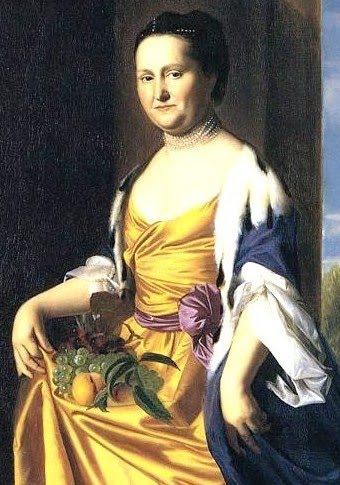_Martha_Swett_(Mrs_Jeremiah_Lee)___Wadsworth_Atheneum__Reproduction_at_1st-art-gallery_com_.jpg) 1769 Detail. John Singleton Copley (1738-1815) Martha Swett (Mrs Jeremiah Lee).
1769 Detail. John Singleton Copley (1738-1815) Martha Swett (Mrs Jeremiah Lee).
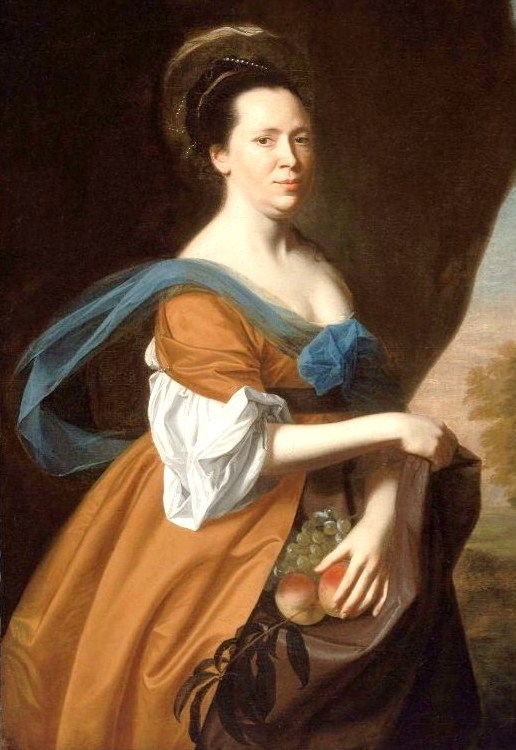.+Elizabeth+Murray+(Mrs.+James+Smith).+Museum+of+Fine+Arts,+Boston..jpg) 1769 Detail. John Singleton Copley (1738-1815). Elizabeth Murray (Mrs. James Smith).
1769 Detail. John Singleton Copley (1738-1815). Elizabeth Murray (Mrs. James Smith).
__The_Peale_Family__New_York_Historical_Society__Reproduction_at_1st-art-gallery_com_.jpg) 1771-73 Detail. Charles Willson Peale (1741-1827). The Peale Family.
1771-73 Detail. Charles Willson Peale (1741-1827). The Peale Family.
.+Elizabeth+Lewis+(Mrs.+Ezekiel+Goldthwait).+Museum+of+Fine+Arts,+Boston.+Reproduction+at+1st-art-gallery.com..jpg) 1771 John Singleton Copley (1738-1815). Elizabeth Lewis (Mrs. Ezekiel Goldthwait).
1771 John Singleton Copley (1738-1815). Elizabeth Lewis (Mrs. Ezekiel Goldthwait).
 1772 Charles Willson Peale (1741-1827). General John Cadwalader, his First Wife, Elizabeth.
.+Hannah+Fayerweather+(Mrs.+John+Winthrop).+Metropolitan+Museum+of+Art.+Reproduction+at+1st-art-gallery.com..jpg) 1773 Detail. John Singleton Copley (1738-1815). Hannah Fayerweather (Mrs. John Winthrop).
1773 Detail. John Singleton Copley (1738-1815). Hannah Fayerweather (Mrs. John Winthrop).
.+Isabella+and+John+Stewart.+Museo+Thyssen+Bornemisza,+Spain.++Reproduction+at+1st-art-gallery.com..jpg) 1774 Detail. Charles Willson Peale (1741-1827). Isabella and John Stewart.
1774 Detail. Charles Willson Peale (1741-1827). Isabella and John Stewart.
.+Elizabeth+Perscott+(Mrs.+Henry+Daggett)..jpg) 1774 painting attributed to Ralph Earl (1751-1801). Elizabeth Perscott (Mrs. Henry Daggett)
1774 painting attributed to Ralph Earl (1751-1801). Elizabeth Perscott (Mrs. Henry Daggett)
.+Ann+Marsh+(Mrs+David+Forman)+%26+Child.+Brooklyn+Museum..jpg) 1785 Detail. Charles Willson Peale (1741-1827). Ann Marsh (Mrs David Forman) & Child.
1785 Detail. Charles Willson Peale (1741-1827). Ann Marsh (Mrs David Forman) & Child.
+(1763%E2%80%931823)+Yale.jpg) 1787 Detail. Charles Willson Peale (1741-1827). Deborah McClenahan (Mrs. Walter Stewart).
1787 Detail. Charles Willson Peale (1741-1827). Deborah McClenahan (Mrs. Walter Stewart).
+Benjamin+%26+Eleanor+Ridgley+Laming.+National+Gallery+of+Art.+Reproduction+at+1st-art-gallery.com..jpg) 1788 Charles Willson Peale (1741-1827) Benjamin & Eleanor Ridgley Laming.
1788 Charles Willson Peale (1741-1827) Benjamin & Eleanor Ridgley Laming.
 1788 Detail. Charles Willson Peale (1741-1827). William Smith & Grandson.
 1795 Detail. James Peale (1749-1831). Artist & His Family.
 1720 Detail. Nehemiah Partridge. Wyntje Lavinia Van Vechten.
 1729 Detail. John Smibert. The Bermuda Group.
.jpg) 1747-1749 Detail. Robert Feke (1707-1751). Mary Channing (Mrs. John Channing).
1747-1749 Detail. Robert Feke (1707-1751). Mary Channing (Mrs. John Channing).
 1760-65 Detail. Joseph Badger (1708-1765). Sarah Badger Noyes.
.+Elizabeth+Storer+(Mrs.+Isaac+Smith).+Yale+University+Art+Gallery.+Reproduction+at+1st-art-gallery.com..jpg) 1769 Detail. John Singleton Copley (1738-1815). Elizabeth Storer (Mrs. Isaac Smith).
1769 Detail. John Singleton Copley (1738-1815). Elizabeth Storer (Mrs. Isaac Smith).
 1772 Detail. Winthrop Chandler (1747-1785). Eunice Huntington Devotion
.+Archibald+Bullock+Family.+High+Museum,+Atlanta.+Reproduction+at+1st-art-gallery.com..jpg) 1775 Detail. Henry Benbridge (1743-1812). Archibald Bullock Family.
1775 Detail. Henry Benbridge (1743-1812). Archibald Bullock Family.
 1785 Detail. Ralph Earl (1751-1801). Callahan Children.
.+Elizabeth+Davis+(Mrs.+Hezekiah+Beardsley).+Yale+University+Art+Gallery..jpg) 1785-90 Beardsley Limner Sarah Bushnell Perkins Elizabeth Davis (Mrs. Hezekiah Beardsley).
1785-90 Beardsley Limner Sarah Bushnell Perkins Elizabeth Davis (Mrs. Hezekiah Beardsley).
 1798 Detail. Ralph Earl. Mrs. Noah Smith and Her Children.
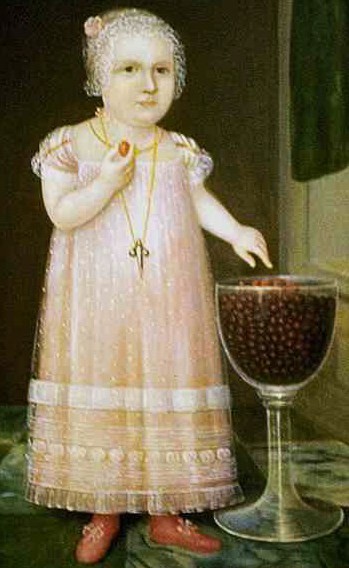 1800 Detail. Anonymous Artist. Emma Van Name.


